


Mbappé and Hello Kitty Maker Sanrio Apologize to China Amid Wave of Foreign Brand Backlashes
What do French soccer star Kylian Mbappé and the Japanese company behind Hello Kitty have in common? Before this week, very little. Now they share an unenviable distinction: both have angered Chinese fans and consumers, then rushed to apologize and contain damage with major earnings on the line. The back-to-back controversies illustrate how difficult it can be to do business in China, where crossing a perceived red line often triggers swift and unforgiving retribution.

Mbappé’s Mao Remark Ignites a Social Media Firestorm
It started when Real Madrid forward Mbappé appeared in a video posted by a French talk show, discussing a meme in which his face had been photoshopped onto “some guy – I think he’s a Chinese dictator.” That “guy” was former Chinese leader Mao Zedong. Despite a tumultuous reign associated with disastrous policies and tens of millions of deaths, Mao remains revered as the father of the People’s Republic, and his legacy is still a highly sensitive topic in China, half a century after his death.
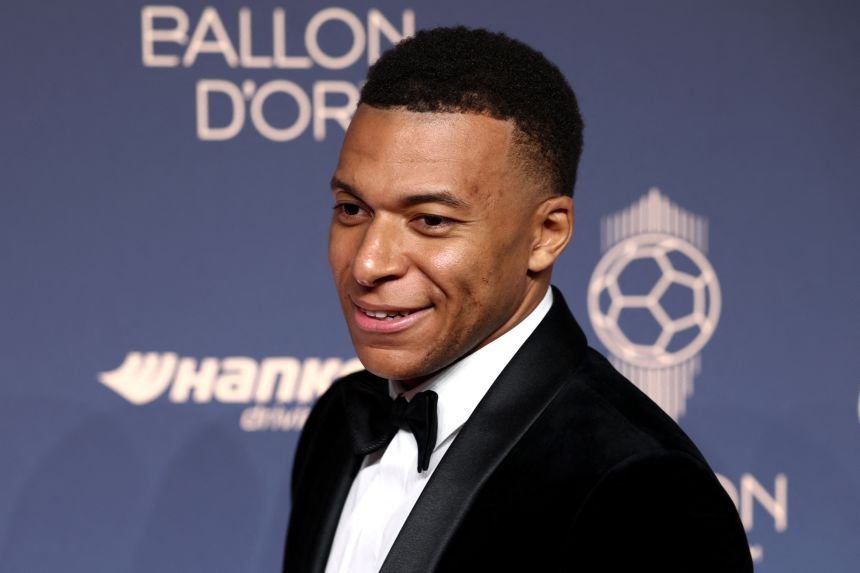
Mbappé’s comment immediately lit a firestorm on Chinese social media that swiftly traveled offline. Multiple brands cut ties with him, citing “zero tolerance for any words or actions that hurt the feelings of the Chinese people.” State media removed all content and ads involving Mbappé—who came second in this week’s Ballon d’Or vote for the world’s top men’s player—and halted broadcasts of matches and events involving him and Spain’s La Liga.
Facing further repercussions, Mbappé issued a formal apology on Tuesday. “My comment was ill-judged, and I now understand that it hurt many people in China and in Chinese communities around the world,” he said. La Liga and other brands affiliated with Mbappé also sought to reverse the damage, emphasizing how much they valued and respected their Chinese partners.
Sanrio Pulls Hello Kitty Merchandise Linked to Japanese Spy Drama
Before the furor had even died down, another was beginning—this time over Hello Kitty maker Sanrio. The company had collaborated with Japanese spy drama VIVANT to create merchandise featuring Sanrio characters, including Hello Kitty, My Melody, Kuromi and Cinnamoroll, wearing outfits from the TV show. But the show had been labeled anti-Chinese by China’s state media amid ongoing geopolitical tensions, and the collaboration went viral on Chinese social media, where users criticized the series for depicting Chinese intelligence agents torturing Japanese spies.
By Thursday, Sanrio had backtracked, saying it had “received feedback from various parties.” The company stated that the collaboration contained expressions inconsistent with Sanrio’s corporate values and that it would discontinue the project, along with all subsequent projects and promotional activities. The statement appeared on Sanrio’s website and on Weibo, where a hashtag about the apology racked up more than 180 million views.
Chinese officials also weighed in. VIVANT “once again exposes the fact that there has always been a force within Japan that seeks to vilify and smear China through cultural products and spread anti-China sentiment,” said Ministry of Foreign Affairs spokesperson Guo Jiakun at a regular press briefing on Thursday.

The Familiar Apology Playbook for Foreign Brands in China
In both cases, Sanrio and Mbappé followed a now-familiar pattern: apologize deferentially, retract statements, discontinue controversial products, and hope it blows over. The same sequence unfolded with Dolce & Gabbana in 2018, Versace in 2019, the Houston Rockets and the NBA in 2019, H&M and Nike in 2021, Bulgari in 2023, and Lululemon earlier this year.
The controversies range across topics, but many concern geopolitical or historical sensitivities, such as the status of Hong Kong and Macao as semi-autonomous regions of China, or Taiwan, the self-governing democracy Beijing views as part of its territory. Others, including the Lululemon and Sanrio episodes, were fueled by historical animosity between China and Japan, with anti-Japanese sentiment gaining traction in China as bilateral ties worsen.
Foreign brands and celebrities doing business in China must tread carefully because “the Chinese consumer is hyper-sensitive to any slights or perceived slights or attacks on the Chinese country and on the Chinese people,” said Shaun Rein, founder and managing director of the China Market Research Group. “Brands have to be cautious, and they’re getting more and more so because they hire consultants and internal executives who understand historical problems and geopolitical sensitivities,” he added.
This heightened online sensitivity has coincided with surging ultranationalism in recent years and China’s increased assertiveness in foreign policy and territorial conflicts. Ironically, on China’s highly censored social media platforms, many outlets have not explicitly spelled out Mbappé’s comments, leaving many Chinese people to wonder what he said in the first place to hurt their feelings.
Why Brands Still Risk China’s Enormous Consumer Market
But for many brands, the risk is worth it to access China’s enormous consumer market. Sanrio China reported revenue of $117 million in the first half of 2026 alone, according to Chinese state media. The same calculation applies to sports stars who rely on lucrative endorsements—especially in a nation already mad about basketball and hungry for soccer.
Though Western sports leagues and teams cannot publicly warn their players to avoid angering China without risking a different sort of backlash, such guidance may well happen behind the scenes, according to sports analyst Mark Dreyer, who wrote a 2022 book about China’s sporting ambitions. “That’s just sensible business practice, particularly if you have multi-million dollar sponsorships on the line,” he told Reuters.

Some Apologies Repair the Damage. Others Linger for Years.
Some controversies die down relatively quickly, and brands recover. Other times, the damage is long-lasting and expensive. Years after a series of racially controversial ads and offensive private messages allegedly sent by a co-founder, Dolce & Gabbana remains a label non grata in China. After the Houston Rockets general manager voiced support for the Hong Kong pro-democracy protest movement in 2019, China severed ties with the NBA and banned all teams from playing in the country, despite copious apologies, until they were finally allowed to return last year.
It is unclear how long the road to recovery will be for Sanrio and Mbappé. But “these are the stakes of playing in China,” said Zak Dychtwald, founder of Bridgeworks Global, which advises multinational organizations. “When it goes well, everybody celebrates. And it’s the second largest economy on earth and most often your biggest growth segment for whichever company and industry you’re in. But when you get it wrong, it could be extraordinarily painful and swift in its retribution.”
The Mbappé and Sanrio episodes are more than isolated publicity crises. They are a reminder that global brands and public figures operating in China must navigate a landscape where cultural, historical, and political sensitivities can shift without warning, and where the cost of a miscalculation can be measured in lost partnerships, pulled broadcasts, and millions in revenue. For now, both the athlete and the company behind Hello Kitty are hoping deference and speed will be enough to restore access to one of the world’s most valuable markets.
News, Business, Sports, Entertainment, Society, International Business, China, Japan, France, Kylian Mbappé, Sanrio, Hello Kitty, Brand Apologies, Foreign Brands, Sports Endorsements, Consumer Markets, Geopolitical Tensions, Cultural Sensitivity, Social Media Backlash, Celebrity Controversies, Multinational Corporations, East Asia, Real Madrid, La Liga, Ballon d’Or, Ultranationalism


