

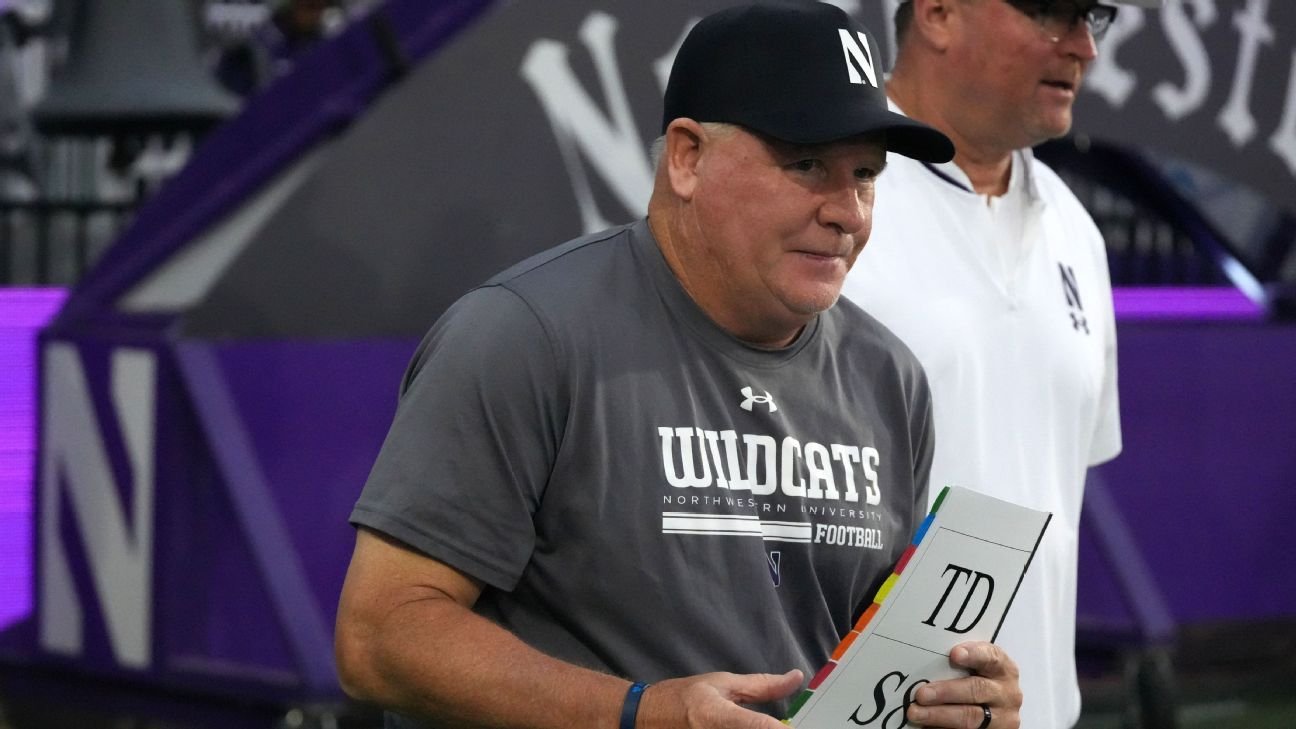

The Chip Kelly Renaissance: How an Offensive Architect is Rewriting the Northwestern Playbook
In the high-stakes world of college football, coaches are often pigeonholed by their recent history. For Chip Kelly, that history included a brief, tumultuous stint as the Las Vegas Raiders’ offensive coordinator in 2025. But as the 2026 season unfolds, the narrative around the former Oregon head coach has shifted from “NFL outlier” to “schematic genius” once again.
Now serving as the offensive coordinator for Northwestern, Kelly has achieved what many thought impossible: transforming one of the most stagnant offenses in the Big Ten into a high-octane, explosive juggernaut. By blending vintage football concepts with modern personnel, Kelly isn’t just winning games; he is providing a masterclass in tactical problem-solving that has captured the attention of the entire football world.
From Stagnation to Explosive Production
To understand the magnitude of Kelly’s impact, one must look at the statistical vacuum he inherited. Prior to his arrival, the Northwestern offense was characterized by its lack of verticality and inefficiency in crucial scoring zones. The numbers from the previous decade tell a story of struggle:
| Metric (2015–2025) | Northwestern Rank/Avg |
|---|---|
| Points Per Game | 21.3 (132nd Nationally) |
| Yards Per Game | 340.1 (130th Nationally) |
| Red Zone TD Efficiency | 45.8% (129th Nationally) |
| Explosive Plays (20+ Yards) | 4.9% (Near bottom of FBS) |
Under Kelly’s direction this season, the Wildcats have undergone a complete metamorphosis. They currently rank second nationally in plays of 10 yards or longer (27.4%) and have become a terror in the Big Ten, frequently eclipsing the 500-yard mark against conference opponents. This isn’t just a marginal improvement; it is a structural revolution.
The Wing-T Revival: Mining the Archives
The “secret sauce” behind this resurgence is Kelly’s willingness to look backward to move forward. While most modern coordinators lean heavily on the spread or RPO (Run-Pass Option) systems, Kelly has dusted off the Wing-T formation—a scheme that once dominated the game but has largely become a relic of the past.
By studying the legendary Delaware offenses of the 1980s, Kelly has implemented a system built on misdirection, unique shifts, and versatile wingback roles. This “archivist” approach allows him to maximize the specific skill sets of his roster. Rather than forcing players into a rigid mold, he builds a “formula” around them.
“I don’t think of coaching as being creative. As a coach, your job is to be a problem solver. What’s the problem that’s presented to you, and how do you solve the problem? That’s it.”
— Chip Kelly
This approach has proven particularly effective against modern defenses that are trained to combat speed and spread formations but are often left scrambling when faced with the deceptive, slow-developing mechanics of the Wing-T Sally or the “Polecat” formation.
Key Personnel Drivers
- Aidan Chiles (QB): The dual-threat engine of the offense, providing the mobility necessary to execute Kelly’s hybrid schemes.
- Joseph Himon II (RB): A primary beneficiary of the misdirection, averaging nearly 10 yards per rush.
- Jackson Carsello (C): The anchor of an offensive line tasked with navigating complex blocking assignments in unorthodox sets.
The NFL vs. College Divide: Why Kelly Thrives at Northwestern
A recurring question among analysts is why a coach of Kelly’s caliber struggled in the NFL with the Raiders before finding such immediate success in Evanston. The answer appears to lie in the fundamental differences between professional and collegiate football environments.
In the NFL, the margin for error is razor-thin, and the fear of “looking foolish” can stifle innovation. Every play is scrutinized on social media, and coaches often face immense pressure to adhere to established, “safe” methodologies. In Las Vegas, Kelly faced a roster with talent gaps and a coaching environment that occasionally clashed with his offensive philosophy.
Conversely, at Northwestern, head coach David Braun has provided Kelly with something rare: absolute autonomy. By fostering a “low ego, high output” culture, the Wildcats have allowed Kelly to experiment with “CFL splits” and throwback formations without the immediate fear of professional repercussions. This freedom has allowed him to be the “uninhibited” innovator the football world remembers from his time at Oregon.
Looking Ahead: The Path to the Playoff
As Northwestern approaches its most grueling stretch of the season, the pressure is on to prove that this offensive surge is sustainable. Upcoming matchups against elite defenses—specifically Iowa and Ohio State—will serve as the ultimate litmus test. These opponents specialize in limiting explosive plays, the very thing Kelly’s offense thrives on.
For Northwestern, the stakes extend beyond a single season. The university is clearly invested in the “Kelly Era,” with athletic director Mark Jackson emphasizing the importance of retaining his services. With his influence stretching into future recruiting—evidenced by his involvement with rising stars like RJ Day—Kelly isn’t just coaching a season; he is helping map out the future of Northwestern football.
Whether he stays in Evanston or eventually returns to the high-profile coaching circles of the Big Ten or NFL, one thing is certain: Chip Kelly has reminded the sport that in the game of football, the most effective way to solve a problem is to stop playing by everyone else’s rules.
Sports, College Football, Northwestern Wildcats, Chip Kelly, Big Ten, Offensive Strategy, NFL, Coaching, NCAA


