

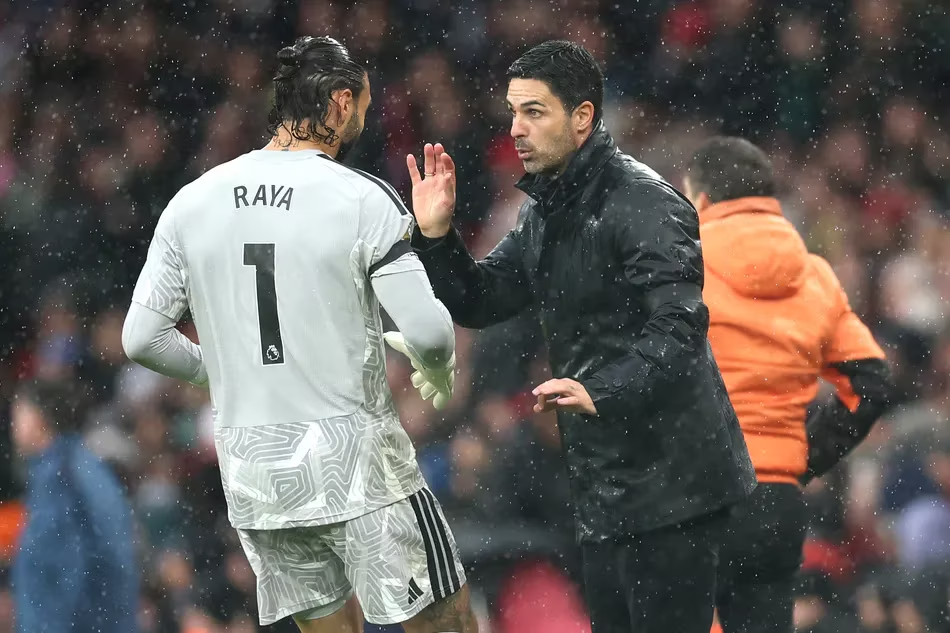

Arteta Praises Arsenal Mentality After Hard-Fought Win Over Everton Moves Gunners Level at Premier League Summit
Arsenal returned to the top of the Premier League table on points following a composed 2-0 victory over Everton at Emirates Stadium, a result that showcased the squad’s resilience amid a punishing fixture schedule. Goals from centre-backs Ezri Konsa and Gabriel Magalhães secured the three points, with the latter marking his 200th Premier League appearance with a decisive second-half strike.
Fixture Congestion and the Mental Test
Speaking to the media after the match, manager Mikel Arteta highlighted the extraordinary demands placed on his squad during a week that began with a Sunday afternoon kick-off, continued with a Champions League trip to Munich on Wednesday night, saw the team return to London in the early hours of Thursday, and culminated in a Saturday 3 p.m. start against a well-organised Everton side.
“We were given a terrible schedule. Playing Sunday afternoon, then Wednesday night in Munich, coming here really late on Thursday and then having to play again in the Premier League against a really tough opponent on Saturday at 3pm. We have overcome some injuries, and I’m really proud of the mentality of the team in the conditions today.”
The Spaniard’s frustration with the calendar is shared across the league, but Arsenal’s ability to navigate the congestion without dropping points underscores the depth and psychological preparation embedded within the group.
Gabriel Leads by Example on Landmark Day
Gabriel’s afternoon encapsulated the fighting spirit Arteta demands. After going down with what appeared to be a concerning injury, the Brazilian centre-back refused to leave the pitch, insisting he could continue. Minutes later, he rose highest to power home the goal that effectively ended Everton’s resistance.
“He’s a clear example when I’m talking about the mentality of the team, meaning as well the mentality of individuals,” Arteta said. “Immediately after he went down, he said he wanted to continue, and then he scored the goal that helped us win the game. That’s what we need from our players.”
The goal was Gabriel’s second of the campaign and arrived on his 200th Premier League appearance, a milestone that reflects his consistency since joining from Lille in 2020.
Set-Piece Breakthrough Rewards Persistence
Arsenal’s opening goal, a header from Konsa, ended a frustrating run without a set-piece goal in the Premier League. Arteta revealed the coaching staff, led by set-piece specialist Nicolas Jover, had identified the delivery as a key area, and the players’ belief in the process never wavered.
“I was sure it was going to unlock something, and the belief of the players. They are already convinced, the level of attention when we train and what they believe in what Nico [Jover] does, there is no question of that. But in the end, it has to come through and make the difference – and that is a massive one for us.”
The manager added that Arsenal should have converted at least two set-piece opportunities against Bayern Munich in midweek, a detail that illustrates the fine margins separating progression from elimination in Europe.
Midfield Fluidity and Tactical Adaptability
Arteta praised his midfield unit’s ability to rotate positions dynamically, a tactical adjustment designed to disrupt Everton’s compact defensive structure. By alternating between deeper and advanced roles, Arsenal’s midfielders created overloads in pockets of space, allowing the team to control tempo and generate scoring chances.
“It depends on the opponent. It’s a team that if you give them clear reference, it’s extremely difficult to break them down. That’s why we had the profile we had in midfield to start with; they decided to become a bit more active, and we understood it really well to occupy the spaces and hurt them in the right moments.”
Squad Depth Validated by Five Changes
The victory came despite five changes to the starting XI, a testament to the culture Arteta has cultivated. Players stepping in from the bench or rotated into the lineup delivered performances that justified the manager’s trust and will likely encourage further rotation as the season enters its decisive phase.
“That’s great for us, and will for sure make me do it again. We have no reason not to do it, because we have an unbelievable group of players with the right mentality who are all ready to play their part when they’re ready. They did that today.”
Injury Management and Defensive Contingencies
Arteta provided updates on several fitness concerns. William Saliba remains sidelined, while Riccardo Calafiori was withdrawn as a precaution after feeling a minor issue. The manager expressed optimism about the defensive options available, praising the partnership between Gabriel and the players deputising alongside him.
“William is not fit, and we’re desperate to have him back because we know what Wilo does for us. Mosquera when he plays will be the same, because between them in the way they train to improve, and how they look after each other, it’s the beauty of our team.”
Touchline Discipline and Competitive Fire
Arteta received his second yellow card of the season for stepping out of his technical area, prompting a characteristically wry response. The manager jestingly suggested installing sensors on the touchline and pointed out that other managers frequently leave their areas without sanction.
“I do have to be careful, put sensors there! There are managers that have the record in the league, 36 times in 10 minutes they leave the touchline, no yellows. I’m clipping all of that, I have a massive storage of images, I don’t have the record yet. Let’s see – then it’s 36 yellow cards in 10 minutes for managers, where are we going to be then? Let’s see.”
The comment, delivered with a smile, masks a serious point about consistency of officiating, but also reflects the emotional investment Arteta brings to every match.
Momentum and Perspective in the Title Race
With the win, Arsenal sit level on points at the summit, though goal difference may separate them from rivals. Arteta refused to be drawn on the broader title picture, insisting the focus remains internal.
“We just have to focus on what we can do, and we’re very pleased with 90% of the performances and results – apart from the Brighton game, I would say.”
The reference to the lone domestic defeat this season (a 3-1 loss at Brighton in late August) highlights the exacting standards the manager has set. Nine wins from ten Premier League matches represents a formidable return, and the early goal against Everton — Konsa’s header arrived before the half-hour mark — was a deliberate tactical objective.
“I think today my fear was the longer they stay in the result, score first, and it drives into 65, 70 minutes, then we have a problem. So I wanted us to be very aggressive from the beginning, go for it and try to impose ourselves early in the match.”
That proactive approach paid dividends, with Arsenal controlling large spells and limiting Everton to few clear-cut opportunities.
Conclusion: A Statement of Intent
Arsenal’s victory over Everton was more than three points; it was a demonstration of the squad’s depth, tactical versatility, and psychological resilience. From the set-piece breakthrough to the seamless integration of rotated players, from Gabriel’s inspirational leadership to Arteta’s masterful navigation of a brutal schedule, every element aligned to produce a performance that champions are built upon.
As the season progresses, the challenges will only intensify — European nights, domestic cup ties, and the relentless pressure of a title race decided by margins. But if this match revealed anything, it is that Arsenal possess the collective mentality and structural coherence to meet those challenges head-on. The journey continues; the standard has been set.
Sports, News, Arsenal FC, Premier League, Mikel Arteta, Emirates Stadium, Football Tactics, Squad Rotation, Set Piece Strategy, Title Race, Gabriel Magalhães, William Saliba, Bukayo Saka, Nicolas Jover, Injury Management, Match Analysis


