

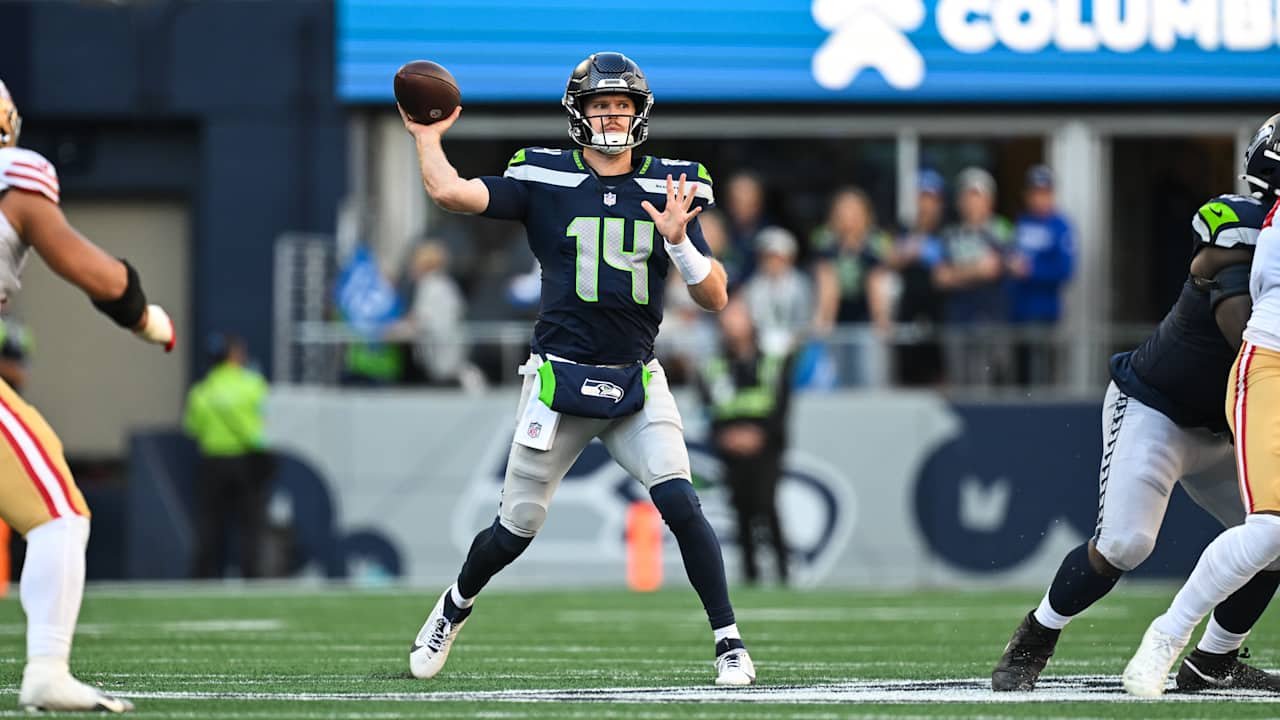

Darnold, Seahawks Hunt Turnover Fix on Short Week Before Thursday Night Showdown
Coming off a Week 5 loss where self-inflicted mistakes overshadowed flashes of offensive promise, the Seattle Seahawks are using a compressed preparation window to address the issue that has defined their early-season identity: protecting the football. Quarterback Sam Darnold threw an interception on Seattle’s opening drive Sunday, responded with a touchdown drive two possessions later, and spent the days since admitting the turnover margin is the single variable that could flip the script for an offense still searching for its rhythm.
Early Pick, Quick Answer Sets Tone for Week
Darnold’s first pass attempt of Sunday’s game landed in the hands of the opposition, a start that could have derailed a younger quarterback. Instead, the ninth-year veteran reset. Two offensive drives later, he orchestrated a scoring march that reminded the sideline of what the Seahawks passing attack looks like when the ball stays in play.
“For me, it’s easy to overthink things when you’re not having as much success as you’d like,” Darnold said. “A short week makes it a bit different but trust the process and understand that there’s things that I have to do differently on the field. Understand what those mistakes are and not make them again. It’s that simple.”
The simplicity of that mantra belies the complexity of the numbers. Since returning from injury in Week 3, Darnold has compiled 742 passing yards, seven touchdowns, and a 64.5% completion rate across three games. But the ledger also shows five interceptions, four of which opponents returned for scores. That turnover differential has become the central talking point in meetings led by head coach Mike Macdonald and offensive coordinator Brian Fleury.
The Turnover Ledger Since Week 3 Return
| Metric | Total | Context |
|---|---|---|
| Passing Yards | 742 | Three-game sample |
| Touchdowns | 7 | 2.3 per game average |
| Completion Rate | 64.5% | League average range |
| Interceptions | 5 | 4 returned for TDs |
| Games | 3 | Weeks 3–5 |
“Anytime you control the turnovers, everything else gets better. That’s the thing that we’re focused on, taking care of the football. That’s the main thing that we’re focused on but at the same time, we’re going to continue to play fast as well.”
— Sam Darnold
Fleury and Darnold Build a Decisiveness Blueprint
Immediately after the Week 5 loss, Fleury and Darnold began a focused review aimed at one outcome: faster, cleaner decisions. The coordinator’s diagnosis was straightforward—lean into the concepts the quarterback has executed repeatedly since training camp.
“It’s relying more heavily on plays that we have a lot of experience with both through training camp and through the first couple weeks that he’s comfortable making swift decisions and progressing through,” Fleury said. “We’re going to lean more in that direction.”
The approach reflects a broader philosophical shift. Rather than asking Darnold to master every concept in the playbook on a short week, the staff is curating a menu of high-confidence throws—route combinations, protections, and progressions the quarterback has repped until they’re automatic.
Weekly Dialogue Shapes Game-Plan Comfort Zones
Fleury described an ongoing conversation that starts well before the Wednesday walkthrough. Each week, the pair reviews the game plan concept by concept, identifying which routes, which receivers, and which protections give Darnold the clearest picture.
“Yeah, we have weekly conversations about each game plan, what concepts he is most comfortable with and what concepts with which receivers he’s the most comfortable with,” Fleury said. “It’s just constant communication between the two of us to get to stuff to when the call comes in, he’s like ‘Yeah, absolutely. I know we’re moving the ball on this one.'”
The coordinator summarized the philosophy in a sentence that doubles as a coaching credo: “Ideally, you want to focus on what you do well. I think that’s a formula for success with anything.”
Kupp Diagnoses the ‘Self-Inflicted’ Ceiling
Wide receiver Cooper Kupp, a veteran of high-functioning offenses, offered the most candid assessment of where Seattle stands. The flashes are there—explosive plays, efficient stretches—but they’re interrupted by avoidable errors.
“We have flashes of moments of efficiency, moments of explosiveness, and moments of where we’re playing good football,” Kupp said. “Then we also have moments where it’s not good enough. There are mistakes, it’s going backwards, and there are self-inflicted wounds. It’s finding ways to eliminate those and keep things moving forward and keep the ball moving forward. It’s our own stuff and we just have to be better there.”
That “own stuff” framing is critical. The Seahawks aren’t losing because of schematic mismatches or talent deficits; they’re losing because of penalties, missed assignments, and quarterback decisions that hand the opponent short fields. On a short week, the margin for such errors shrinks further.
Thursday Night Urgency Compresses the Correction Cycle
A Thursday Night Football matchup against a division rival turns every practice rep into a high-leverage moment. The condensed schedule eliminates the usual Monday-to-Saturday rhythm, forcing players and coaches to prioritize the highest-impact corrections.
“For us, there’s a sense of urgency,” Darnold said. “That term, that phrase, ‘sense of urgency,’ has been thrown around a lot the last couple of days and it’s true. There needs to be a sense of urgency to get better and have ball security. I’m going to continue to be as decisive as I can be and go through my reads and trust what I see, trust my feet, all those things. Can’t have turnovers. You have to protect the football in this league. If you don’t, you’ll pay.”
The quarterback’s closing line—“If you don’t, you’ll pay”—captures the stakes. Four pick-sixes in three games isn’t just a statistic; it’s 28 points gifted to opponents, swing plays that flip field position and momentum in a conference where games are routinely decided by a single possession.
What a Cleaner Game Unlocks for Seattle
If the Seahawks can replicate the efficiency Darnold showed after Sunday’s early interception—decisive reads, accurate ball placement, trust in the progression—the offense possesses the pieces to sustain drives and score in bunches. DK Metcalf, Jaxon Smith-Njigba, and Kupp give Darnold three distinct route-running profiles to attack. The run game, led by Kenneth Walker III and Zach Charbonnet, provides the play-action foundation that makes the passing concepts easier to execute.
The defense, under Macdonald’s direction, has kept games competitive. Taking the ball away on one side while protecting it on the other is the classic formula for an NFC West contender. Thursday night offers the first real test of whether the turnover focus translates from meeting room to game speed.
For Darnold, the narrative is familiar: a quarterback with arm talent and experience fighting the perception that turnovers are a fixed trait rather than a correctable habit. The next 48 hours of preparation, compressed and intense, will reveal whether the “trust the process” mantra holds up under Thursday night lights.
Sports, NFL, Seattle Seahawks, Sam Darnold, Football, Thursday Night Football, Brian Fleury, Mike Macdonald, Cooper Kupp, Turnovers, Offensive Strategy, 2024 NFL Season, NFC West, Sports News, Seattle Sports


