

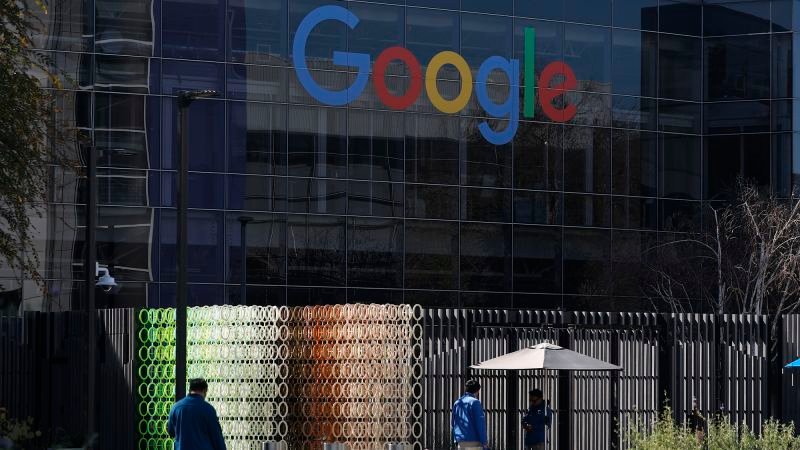

Alphabet Stock Plunges 12% in Record Wipeout as Wall Street Questions AI Spending
Alphabet Inc. shares suffered their steepest single-day decline on record Thursday, tumbling more than 12% and erasing roughly half a trillion dollars in market value as investors grappled with mounting concerns over the tech giant’s artificial intelligence investments and the future of its core search advertising business.
The drop marked the second-largest one-day market capitalization loss in U.S. stock market history, only surpassed by Nvidia‘s nearly $600 billion slide earlier this year. For a company that has long been viewed as one of Wall Street’s most reliable growth engines, the sudden erosion of confidence sent shockwaves through the Big Tech sector and reignited intense scrutiny over the sustainability of the AI boom.
What triggered the sell-off was a confluence of factors that had been brewing for months but reached a critical tipping point with Alphabet’s latest quarterly earnings report. While the numbers themselves were significant, they confirmed fears that Wall Street has been quietly nursing: that the massive spending spree driving the AI revolution might not translate into immediate returns for investors accustomed to steady growth and strong cash generation.
Analysts noted that Alphabet’s third-quarter results missed revenue expectations, reigniting longstanding questions about whether Google’s search advertising business can adapt quickly enough to survive the rise of AI-powered chatbots from competitors. The concern, echoed by portfolio managers across major financial firms, is that consumers are increasingly turning to conversational AI interfaces instead of traditional search queries, potentially undermining the very foundation of Google’s dominance in digital advertising.
Adding fuel to the fire was Alphabet’s disclosure of a second consecutive quarter of negative free cash flow — a rare occurrence for a company that generated consistent positive cash flow throughout its 21-year history as a public company. This metric, closely watched by investors who depend on it for dividend payments and share buybacks, stood in stark contrast to recent reports from Microsoft, which posted $18.6 billion in free cash flow during the same period despite its own substantial AI investments.
The divergence between these two tech titans underscores a broader market reckoning. As companies invest unprecedented sums into building out AI infrastructure — particularly data centers and cloud computing capabilities — investors are demanding clearer evidence of monetization strategies and return on investment. Wall Street’s patience, once boundless for the promise of AI transformation, is showing signs of strain.
Capital expenditures tell much of the story. Alphabet reported spending $51.4 billion in the third quarter alone, putting it on track to exceed $200 billion annually if trends continue. While the company asserts these investments are essential for remaining competitive in the AI arms race, many investors see parallels to previous technology booms where early movers faced disproportionate costs while benefits remained uncertain.
The Search Business Under Siege
At the heart of investor anxiety lies Google’s search advertising empire, which accounts for approximately 55% of Alphabet’s total revenue. For decades, the company monetized billions of daily search queries through targeted ads, creating a predictable revenue stream that investors treated almost like a utility.
However, the emergence of AI chatbots like ChatGPT, Gemini, and Copilot has begun shifting user behavior away from traditional search engines toward direct conversational responses. These new interfaces answer questions, summarize information, and even generate content without requiring users to navigate multiple web pages filled with advertisements.
Jed Ellerbroek, portfolio manager at Argent Capital Management, captured the sentiment succinctly: “There’s growing concern that this displacement might happen faster than Google can react to it and pivot their business.” He added that while Alphabet continues to innovate internally with projects like Gemini, the pace of external competition presents an existential challenge to its core business model.
“The fear is that AI chatbots will cannibalize traditional search revenue before Google establishes itself as a dominant player in the conversational interface space.” — Jed Ellerbroek, Argent Capital Management
Google’s response has included rolling out AI-generated summaries directly within search results and integrating Bard-like features across its suite of products. But skeptics argue that retrofitting an established platform may prove less effective than building new experiences from scratch — precisely what startups and rivals appear poised to do.
Cash Flow Concerns Signal Deeper Shifts
Beyond revenue concerns, Alphabet’s unexpected negative free cash flow raises red flags about the scale and timing of its AI expenditures. Free cash flow represents the money left after capital spending — funds used for everything from R&D to shareholder returns. When it turns negative, companies typically must choose between cutting dividends, taking on debt, or issuing new equity.
For Alphabet, this shift reflects the enormous upfront costs associated with constructing cutting-edge data centers capable of handling generative AI workloads. Unlike software development, which scales relatively cheaply once coded, physical infrastructure requires massive capital outlays years before yielding profits. Investors worry that Alphabet may be front-loading expenses without assurance that returns will materialize in time to justify them.
This dynamic plays out differently across tech companies. Microsoft, leveraging Azure’s head start in cloud services, managed to maintain robust cash flow despite similar AI investments. Meanwhile, Alphabet’s approach appears more aggressive, betting heavily on vertical integration — owning both the hardware (via custom TPUs) and software layers necessary to compete in AI.
| Company | Q3 CapEx (2025) | Free Cash Flow | Stock Reaction |
|---|---|---|---|
| Alphabet | $51.4 billion | Negative | Down 12% |
| Microsoft | Not specified | $18.6 billion | Flat |
Such comparisons highlight how nuanced the market’s reaction is becoming. Not all AI investments are treated equally — efficiency matters, along with demonstrable progress toward profitability.
Who Is Spending Rationally on AI?
Perhaps nowhere was the mood clearer than in comments from Richard Reyle, chief investment officer at Questar Capital Partners, who observed: “We are now getting to see who is spending rationally on AI and who is not.” His remark encapsulates a pivotal moment for Big Tech finance: investors are shifting from blanket optimism to selective backing based on strategic clarity and measurable outcomes.
This evaluation process isn’t limited to public markets. Private ventures like Anthropic, backed by significant funding rounds including a recent IPO filing, illustrate how venture capitalists are also applying stricter criteria. Their decision to lease compute power from established cloud providers — including potentially Google Cloud — signals cautious optimism about long-term demand but raises questions about vendor lock-in and pricing dynamics.
Yet even promising opportunities carry risk. Should the data center buildout encounter supply chain constraints, energy shortages, or regulatory hurdles, the entire premise behind current valuations could unravel further. So too could expectations around AI-driven productivity gains if businesses prove slower to adopt transformative applications than anticipated.
In turn, this uncertainty affects borrowing costs, project timelines, and ultimately consumer-facing innovations. Companies facing tighter scrutiny from shareholders are compelled to justify every dollar spent, slowing expansion in some areas while accelerating others where ROI seems assured.
Broader Implications for Wall Street
Alphabet’s plunge reverberates beyond Silicon Valley, influencing investment strategies worldwide. Mutual funds holding substantial stakes in Alphabet must now reassess portfolio allocations amid heightened volatility in technology stocks. Pension funds and retirement accounts tied to index performance feel indirect exposure, though diversification helps mitigate concentrated losses.
More critically, this episode marks a maturation phase in the AI investment cycle. Early enthusiasm gave way to inflated expectations, followed by careful analysis of actual deployment patterns. With valuations having surged during the initial hype phase, corrections become inevitable as fundamentals realign with reality.
Ted Mortonson, technology sector strategist at Baird, summarized the atmosphere: “Everybody is trying to get through the door at the same time, and it gives people pause.” Indeed, with numerous players competing for limited resources — whether talent, semiconductors, or real estate — bottlenecks emerge, complicating execution plans and increasing operational risks.
Despite turbulence, underlying demand for AI services remains resilient. Growth in cloud computing divisions across major platforms demonstrates sustained enterprise appetite. However, margins narrow when pricing wars erupt, and differentiation becomes harder to sustain amid homogenizing trends in algorithmic offerings.
Looking Ahead: The Path Forward
As markets digest Alphabet’s misstep, attention turns to upcoming announcements from other tech leaders. Earnings calls scheduled for next week will likely offer fresh insights into whether this repricing represents a temporary correction or signals deeper structural shifts in how investors value AI initiatives.
Crucially, Alphabet’s leadership team faces mounting pressure to articulate a coherent roadmap balancing innovation with fiscal discipline. Questions loom large regarding timeline expectations for generative AI monetization, competitive positioning versus emerging platforms, and strategic priorities guiding resource allocation moving forward.
Meanwhile, employees inside Google wonder about potential restructuring or workforce adjustments aimed at streamlining operations and improving agility. Historical precedent shows that major tech firms often undergo internal transformations following public setbacks, refocusing energies on core competencies while divesting peripheral assets.
Ultimately, Thursday’s collapse serves as a wake-up call. The age of unlimited spending justification has ended. Going forward, success hinges not just on technological prowess but on translating ambitious visions into tangible, profitable outcomes that satisfy increasingly discerning stakeholders.
Whether Alphabet recovers swiftly depends largely on restoring faith in its ability to navigate disruption while preserving the strengths that built its legacy. Investors aren’t necessarily abandoning the company — but they’re insisting on transparency, accountability, and proof that the future they envision justifies today’s sacrifices.
Business, Finance, Internet, News, Online, Science, Google, Alphabet Inc, Wall Street, Artificial Intelligence, AI Stocks, Technology Investing, Stock Market Crash, Free Cash Flow, Data Centers, Cloud Computing, Search Advertising, AI Chatbots, Microsoft, Anthropic, Nvidia, Big Tech, Capital Expenditures, Investor Sentiment, Earnings Reports, Market Volatility, Stock Market News, AI Spending, Tech Sector, Nasdaq


