

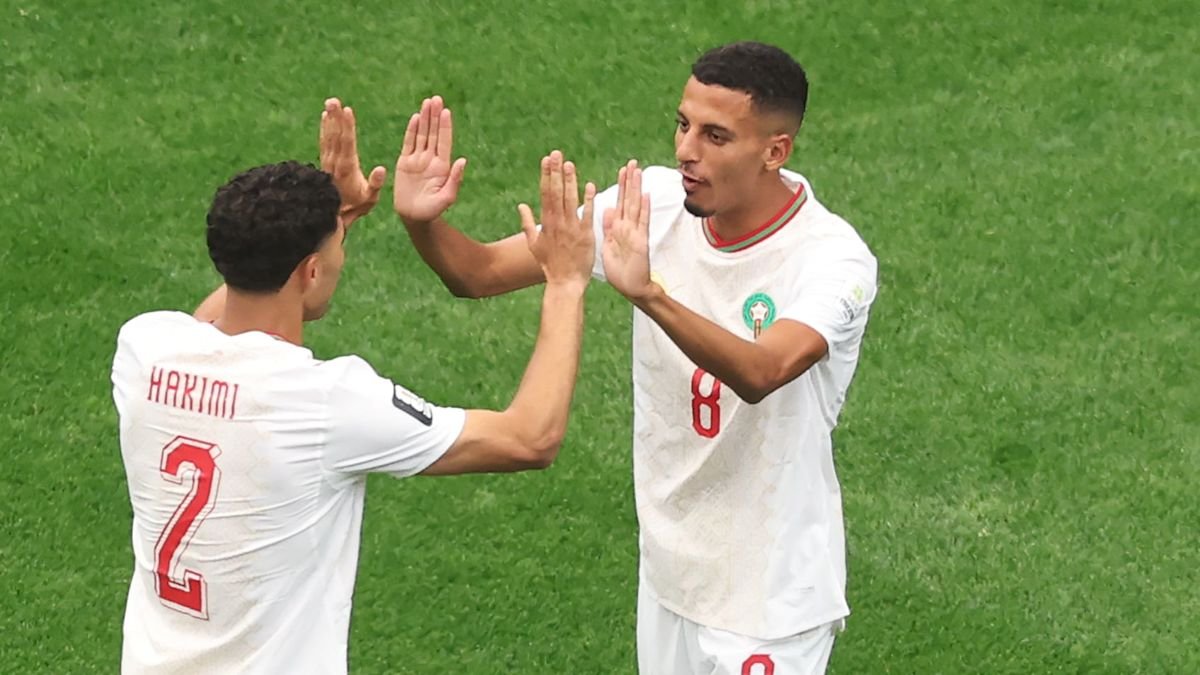

Azzedine Ounahi Undergoes Successful Hamstring Surgery; Achraf Hakimi Leads Support for Sidelined Morocco Star
Morocco international Azzedine Ounahi has successfully undergone surgery to repair the biceps femoris tendon in his right leg, Panathinaikos confirmed on Tuesday, with the midfielder now facing an extended spell on the sidelines. The Greek club announced the procedure was completed without complications, though Ounahi is expected to miss several months of action as he begins a comprehensive rehabilitation programme.
Surgical Details and Medical Team
The operation, performed to address a significant hamstring tendon injury, was overseen by a high-profile medical trio. Panathinaikos club doctor Haris Lalos worked alongside renowned orthopaedic surgeon Nicolas Lefèvre and Christophe Baudot, who holds the dual role of Morocco national team physician and medical advisor to Paris Saint-Germain. The involvement of Baudot underscores the close coordination between club and country in managing the recovery of one of African football’s most promising midfield talents.
Panathinaikos released a statement across their official social media channels confirming the successful outcome: “Ounahi underwent successful surgery today to repair the biceps femoris tendon of his right leg, and his first visitor was a person of equally high prestige, Achraf Hakimi.”
Hakimi’s Hospital Visit Highlights Leadership and Camaraderie
In a gesture that resonated widely across Moroccan and European football circles, Achraf Hakimi — the Atlas Lions captain and PSG star — made a personal visit to Ounahi’s bedside. French outlet Foot Mercato noted that beyond the surgery itself, “the identity of Ounahi’s first visitor drew particular attention.”
Hakimi’s presence reflects the tight-knit culture within the Morocco squad, a group that captured global admiration during their historic run to the 2022 FIFA World Cup semi-finals. The PSG right-back has consistently emerged as a leader both on and off the pitch, and his visit signals the collective responsibility senior players feel toward younger teammates navigating serious injuries.
“This isn’t just about football; it’s about family. When one of us is down, the others show up. Achraf setting that example matters more than people realise.”
The moment also highlights the growing influence of the Moroccan diaspora in elite European football, where players maintain strong bonds despite representing different clubs across multiple leagues.
Recovery Timeline and Rehabilitation Outlook
Biceps femoris tendon repairs typically require a minimum of four to six months before a return to full training, with match fitness often taking longer. Given the complexity of the procedure and the need for careful load management, Ounahi is unlikely to feature for Panathinaikos again this season.
The 24-year-old will now enter a structured rehabilitation protocol, likely beginning with protected weight-bearing and progressive range-of-motion exercises before advancing to strength, proprioception, and eventually football-specific drills. The involvement of Baudot — who monitors the physical condition of Morocco’s internationals — ensures alignment between Panathinaikos’ medical staff and the national team’s long-term planning, particularly with AFCON 2025 qualifiers and 2026 World Cup qualifiers on the horizon.
Impact on Panathinaikos’ Season
Ounahi’s absence represents a significant blow for Panathinaikos, who sit in the upper reaches of the Super League Greece table and remain active in European competition. Since joining from Angers in January 2024, the creative midfielder has become a linchpin in their midfield, contributing goals, assists, and the kind of progressive carrying that unlocks low-block defences. His technical profile — press-resistant, vertically dangerous, and comfortable in tight spaces — is difficult to replace internally.
Head coach Diego Alonso will likely turn to alternatives such as Manolis Siopis or Bernard to fill the void, though neither offers Ounahi’s unique blend of dribbling, vision, and goal threat. The club may explore the free-agent market or short-term loan options if squad depth proves insufficient during the congested spring fixture list.
Broader Context: Morocco’s Golden Generation Manages Adversity
Ounahi’s injury adds to a growing list of fitness concerns for Morocco head coach Walid Regragui, who has also navigated absences for Sofyan Amrabat, Nayef Aguerd, and Youssef En-Nesyri at various points this season. Yet the depth and resilience of this generation — many of whom played together at youth level — has become a defining characteristic.
The presence of medical staff like Baudot across both club and national team structures facilitates seamless information sharing, reducing the risk of premature returns or misaligned rehabilitation targets. This integrated approach has been a hallmark of Morocco’s recent success, blending European club professionalism with national team cohesion.
For Ounahi, the next months will test mental fortitude as much as physical recovery. But with Hakimi’s visit setting the tone, and a support network spanning Athens, Paris, and Rabat, the framework is in place for a full comeback — one that could see him return in time to play a pivotal role in Morocco’s next continental and global campaigns.
What This Means for the Player’s Trajectory
At 24, Ounahi stands at a critical juncture. His move to Panathinaikos was designed to secure regular European football after a frustrating spell at Marseille, and his early performances in Greece validated that decision. A long-term injury inevitably disrupts momentum, but it does not diminish the attributes that made him a World Cup breakout star: intelligence on the ball, tactical versatility, and an engine suited to high-intensity systems.
Clubs across Europe’s top five leagues will continue monitoring his progress. A strong return could reignite interest from sides seeking a modern, multi-functional midfielder — particularly those playing with a double pivot or asymmetric 4-3-3 where Ounahi’s ability to operate as an ‘8’ with ’10’ tendencies is highly valued.
For now, the focus remains on the daily grind of rehab — gym sessions, pool running, gradual reintroduction to pitch work — and the quiet determination that has carried him from the Moroccan lower divisions to the World Cup stage. If the last two years have proven anything, it’s that Azzedine Ounahi does not follow conventional timelines.
News, Sports, Soccer, Football, Morocco, Panathinaikos, Azzedine Ounahi, Achraf Hakimi, Paris Saint-Germain, Injury, Surgery, Rehabilitation, Super League Greece, AFCON, World Cup Qualifiers, Medical Team, Sports Medicine, Athlete Recovery, Team Cohesion, Leadership, African Football, European Football, Transfer Market, Player Development


