

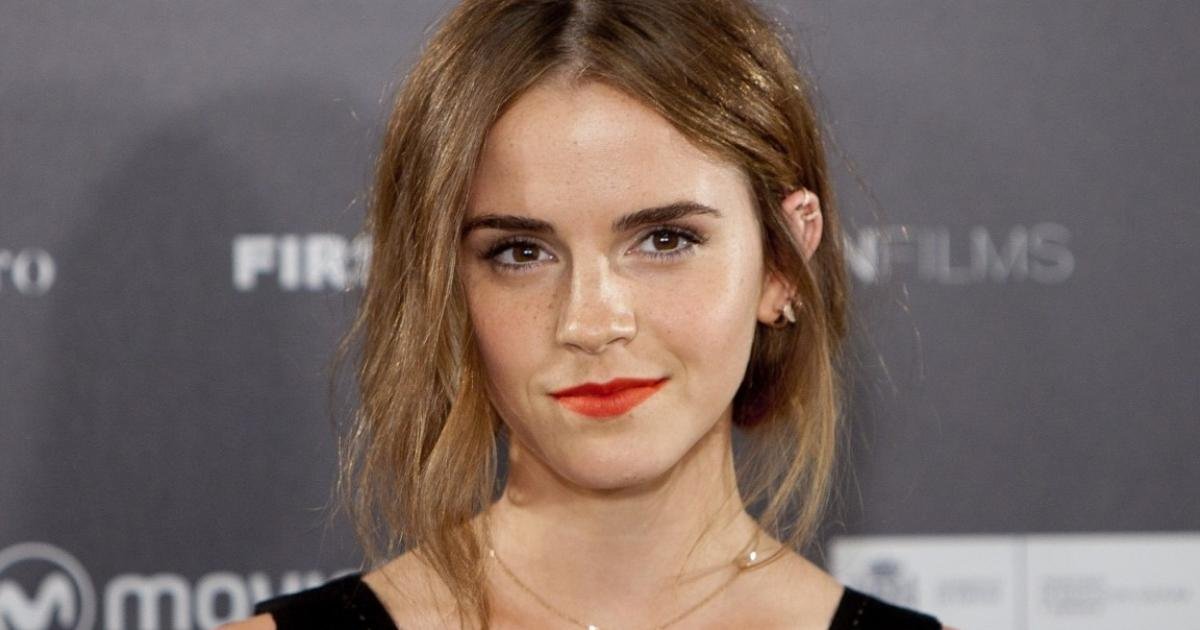

Emma Watson’s Cryptic Instagram Post Sparks Hack Fears Among Fans
The actress and activist Emma Watson, globally recognized for her decade-defining role as Hermione Granger in the Harry Potter franchise, rarely uses her social media platforms. So when a peculiar carousel of low-resolution images appeared on her Instagram feed this afternoon, her millions of followers did not react with typical fandom excitement—they reacted with alarm. The post, devoid of text and populated only by emojis, featured blurry stills from an upcoming film titled Wicker, leading to a deluge of comments questioning whether the star’s account had been compromised.
From Oxford Schoolgirl to Oxford Scholar
Watson’s connection to Oxford runs deep, long before her 2023 enrollment at the university. She grew up in the city and attended the prestigious Dragon School before moving to Headington School, where she completed her GCSEs and A-levels. Her early theatrical training took place at the city’s branch of Stagecoach Theatre Arts, laying the groundwork for a casting that would change cinema history.
At 36, Watson returned to her hometown not for a premiere, but for academia. In 2023, she matriculated at Oxford University to pursue a master’s degree in creative writing, later transferring to a DPhil in literature—a rigorous doctoral research program. The move signaled a deliberate pivot toward a life defined by intellectual pursuit as much as artistic output, a trajectory she has carefully curated since stepping back from the relentless pace of blockbuster filmmaking.
The Post That Broke the Internet’s Calm
The upload in question consisted of three grainy photographs, all appearing to be production stills from Wicker, a film slated for release in UK cinemas on Friday, October 30. The images offered no context, no credits, and no polished marketing sheen. The caption was equally enigmatic: a string of emojis with not a single word of explanation.
For a public figure who treats her digital footprint with the discretion of a diplomat, the departure from norm was immediate cause for concern. Watson has long used her platform for advocacy—championing gender equality through the HeForShe campaign, promoting sustainable fashion, and amplifying literary voices—rather than self-promotion. A sudden, unexplained dump of blurry movie stills violated the unspoken contract she maintains with her audience.
Fans Sound the Alarm: ‘Are You Hacked?’
The comment section filled rapidly with variations of the same question.
“I fear she’s been hacked guys…”
“Are you hacked or something lol?”
“I don’t know if the account is hacked, but I love you.”
The sentiment was a mix of protective concern and baffled affection. In an era where celebrity account breaches are commonplace—often resulting in crypto scams, erratic behavior, or unauthorized endorsements—the default assumption for anomalous activity is compromise, not strategy.
Wicker: A Star-Studded Ensemble Shrouded in Mystery
The film at the center of the confusion, Wicker, boasts a formidable ensemble cast that reads like a BAFTA nomination list. Confirmed co-stars include:
- Olivia Colman (Academy Award winner, The Favourite, The Crown)
- Alexander Skarsgård (Emmy winner, Big Little Lies, Succession)
- Elizabeth Debicki (Critically acclaimed for The Crown, Tenet)
- Richard E. Grant (Oscar nominee, Can You Ever Forgive Me?)
- Peter Dinklage (Four-time Emmy winner, Game of Thrones)
- Marli Siu and Nabhaan Rizwan (rising British talents)
Despite the caliber of talent attached, Wicker has maintained a remarkably low profile in trade publications and industry databases. No major studio has issued a press kit, no festival premiere has been announced, and the film’s director remains uncredited in mainstream entertainment reporting. The October 30 release date—falling on a Friday, the traditional UK cinema opening day—suggests a theatrical rollout, yet marketing materials are virtually nonexistent.
This opacity fuels speculation. Is Wicker a covert art-house project? A genre experiment? A working title for a larger franchise installment? Or—as some skeptics suggest—a fabrication altogether? Without official confirmation from Watson’s representatives or a production company, the film exists in a liminal space between rumor and reality.
A Career Defined by Intentional Absence
To understand why this post feels so jarring, one must understand Watson’s relationship with fame. Since the final Harry Potter film premiered in 2011, she has consistently chosen projects with long gaps between them: The Perks of Being a Wallflower (2012), The Bling Ring (2013), Noah (2014), Regression (2015), Beauty and the Beast (2017), and Little Women (2019). Her last confirmed on-screen role was nearly five years ago.
In a 2023 interview with Financial Times, she described feeling “caged” by the intensity of global recognition and spoke of her Oxford studies as a reclamation of agency. “I wanted to be a student again,” she said. “I wanted to read, write, and think without a schedule dictated by call sheets.”
Her Instagram activity mirrors this philosophy. Posts are sparse—often months apart—and typically highlight book recommendations, climate initiatives, or milestone acknowledgments. A promotional carousel for an unannounced film, posted without commentary, is antithetical to her established digital voice.
What Happens Next: Verification Over Virality
As of publication, neither Watson’s publicist nor her agency, William Morris Endeavor (WME), has issued a statement clarifying the post. The Instagram embed script remains active on the source page, suggesting the post has not been deleted—a detail that cuts both ways. A hacked account typically sees rapid removal of unauthorized content; a deliberate post, however unconventional, stays live.
Industry observers note that unconventional marketing drops—cryptic teasers, ARG-style campaigns, “accidental” leaks—have become tactics for cutting through algorithmic noise. But Watson has never employed such strategies. Her brand is authenticity, not virality.
Until an official source confirms the legitimacy of Wicker and Watson’s involvement, the post remains an outlier: a glitch in the pattern, a question mark in a carefully written sentence. The most prudent response from fans and media alike is patience. In a digital ecosystem that rewards speed over accuracy, the disciplined choice is to wait for verification.
Whether this marks Emma Watson’s return to screen, a student filmmaker’s passion project, or a security breach, the episode underscores a broader truth: in the attention economy, silence is a strategy, and breaking it—even with emojis—makes headlines.
Entertainment, News, People, Arts, Literature, Education, Internet, Society, Celebrities, Film, Social Media, Oxford University, Harry Potter, Emma Watson, Olivia Colman, Alexander Skarsgård, Elizabeth Debicki, Richard E. Grant, Peter Dinklage, Cybersecurity, Hacking, Celebrity News, UK Cinema, Movie Marketing, Digital Culture, Privacy, Fan Culture, Viral Content, Media Literacy


