

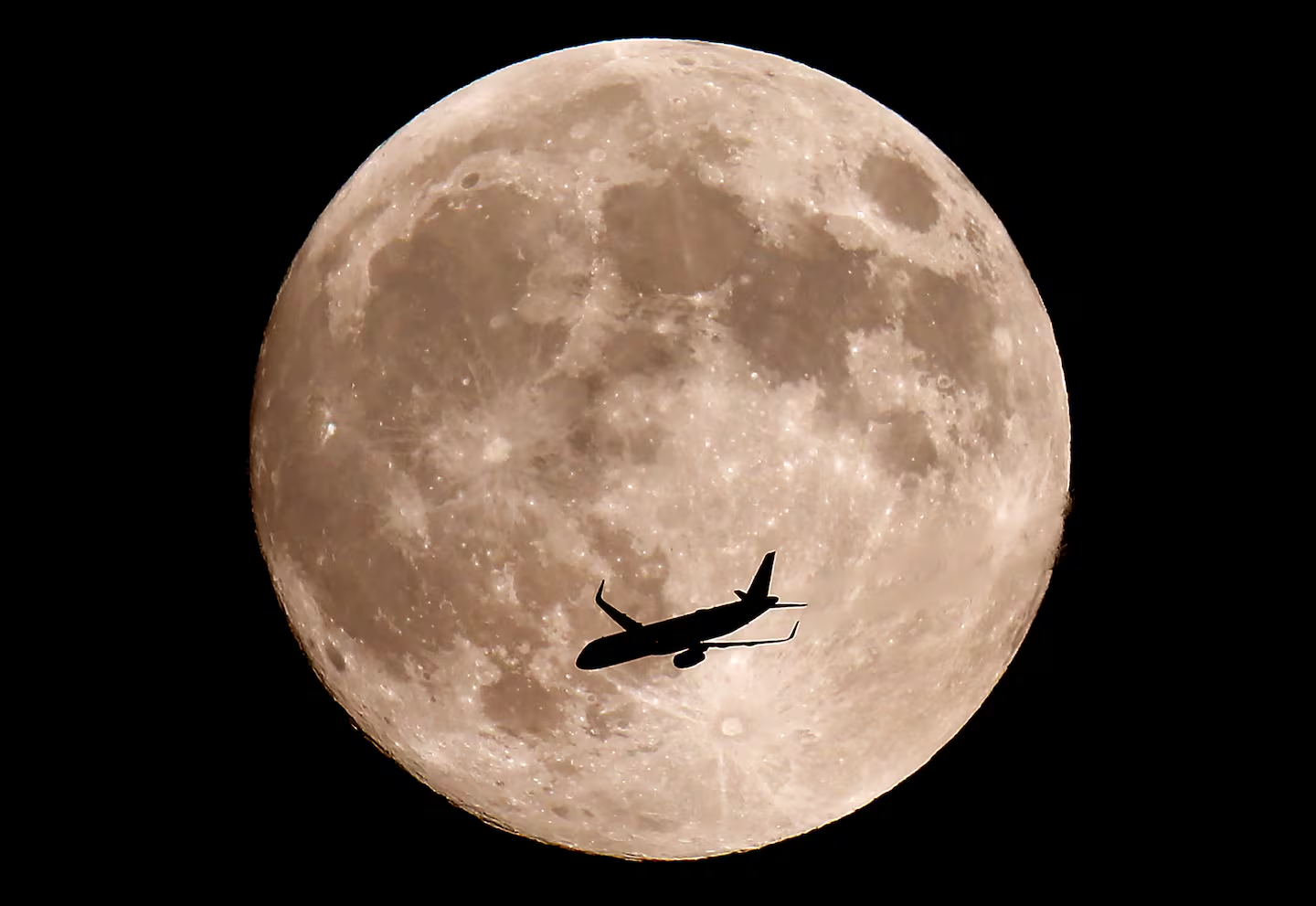

The Hunter’s Moon Brings a Glowing Night Sky and a Celestial Bonus
The Hunter’s Moon is set to grace the night sky on Sunday, when this month’s full moon reaches peak illumination just after midnight.
But you won’t have to wait that long. Some of the best viewing will arrive at sunset, around 5:45 p.m. in the Boston area, as the moon takes on an orange-reddish glow as it rises low, just above the horizon in the east.
With clear skies forecast across New England, this celestial treat combined with the lingering Orionid meteor showers should offer some spectacular views. Exact peak illumination is at 12:11 a.m., Monday. The Orionids, produced from the dust and debris shed by Halley’s Comet, peaked last week, but cloudy skies at the time blocked much of our view here in the Northeast.
What the Hunter’s Moon Means for Tonight’s Sky
The full moon in October is traditionally the Hunter’s Moon, a name that carries a practical history as much as poetry. It signals the shift from the September Harvest Moon to a season of gathering game and preparing for winter. For early hunters, the bright lunar rise soon after sunset offered extra evening light, helping them track animals longer than they might have in darkness.
On this night, the moon’s peak illumination is the main event, though the visual drama begins earlier. As it rises low in the east, it can appear orange-reddish because of atmospheric scattering. That low-hanging light often makes the moon feel larger and softer against the horizon.
The forecast matters. Clear skies across New England were expected to improve the viewing, while the Orionid meteor shower added a secondary layer of skywatching interest. The meteors come from dust and debris left behind by Halley’s Comet, and while they peaked the prior week, lingering activity can still offer sporadic streaks.
Where Does the Name Hunter’s Moon Come From?
October’s full moon is traditionally known as the Hunter’s Moon to signal the shift from gathering crops during September’s Harvest Moon to catching game to stock up for the long winter.
“The bright Moon rising soon after sunset provided extra evening light, allowing hunters to track game longer into the night,” according to the Old Farmer’s Almanac. Also, the deer and other wildlife are easier to spot in the cleared fields and amid the bare trees.
Indigenous peoples of North America have called this moon Falling Leaves Moon, Freezing Moon, Migrating Moon, and Drying Rice Moon.
How to View the Hunter’s Moon and Orionid Meteors
For those who will miss peak brightness tonight, the moon will still appear full through Tuesday as it enters its waning gibbous phase. Even though the moon is technically full tonight, there will be a negligible difference as it rises over the next couple of evenings.
Viewers in the Northeast should still watch for clear breaks in the clouds. The moon’s orange-reddish glow at moonrise is often a favorite for photographers and casual skywatchers alike. The Orionids remain a reminder that meteor showers can be unpredictable; a bright moon can wash out faint meteors, but bright fireballs can still punch through.
If skies stay clear, the combination of a low, warm-hued moon and sporadic Orionid activity could make for a memorable night. The best approach is to find an open horizon, let eyes adjust, and look toward the east just after sunset.
Next Full Moons Are Back-to-Back Supermoons
The next two full moons, the Beaver Moon and the Cold Moon, will offer an added special treat as back-to-back supermoons. That’s when a full moon is at or near its closest approach to Earth, called perigee, during its 27-day elliptical orbit.
According to NASA, a supermoon can appear about 30 percent brighter and up to 14 percent larger than the faintest moon of the year, when it is farthest from Earth in its orbit. Supermoons only happen three to four times a year, and they always appear consecutively.
We had one supermoon in January, and the final ones for 2026 will appear Thanksgiving week, on Tuesday, Nov. 24, when the full Beaver Moon reaches peak illumination at 9:53 a.m. EST, and another one reaches peak fullness on Dec. 23 at 8:28 p.m. EST. The latter will be the closest and brightest supermoon of the year.
The Takeaway for Skywatchers
The Hunter’s Moon may be a familiar name in the lunar calendar, but this month’s version still delivers. Whether it is the extra light for hunters or the reason families step outside with binoculars, the full moon remains one of the simplest and most reliable wonders of the night.
For New England skywatchers, the combination of clear forecast, low moonrise, and lingering Orionids made this a special night. For those who missed the peak, the moon would still appear full through Tuesday, though the sharpest phase had passed. And for future planners, the back-to-back Beaver and Cold supermoons added a striking note to the lunar calendar.
Science, News, Astronomy, Weather, Massachusetts, Boston, New England, Hobbies, Outdoor Recreation


