

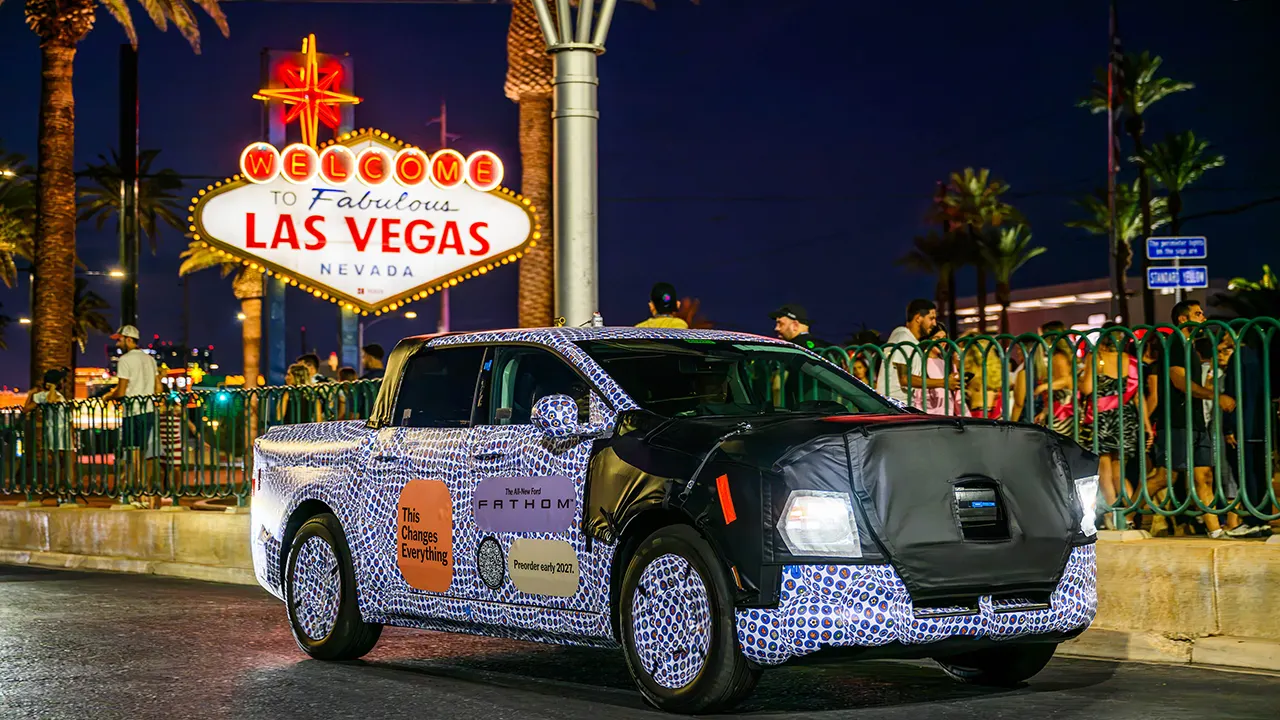

Ford Unveils Fathom Electric Truck with Built‑In Home Power Capability
Ford Motor Company announced Tuesday that its upcoming Fathom electric truck will be able to supply power directly to a home without the need for a separate wall‑mounted inverter when it launches in 2027. Priced below $30,000, the Fathom will be the first U.S. automaker vehicle at that price point to offer true bidirectional power capability straight out of the box.
What Is the Fathom and Why It Matters
The Fathom is positioned as a mainstream, affordable electric pickup that integrates bidirectional power — the ability of the vehicle’s battery to send alternating current (AC) back to a residence or the electric grid. This technology eliminates the traditional hurdle of installing an external inverter, which has kept bidirectional functionality confined to premium models and early adopters.
Bidirectional Power Explained
EV batteries store energy as direct current (DC), while homes operate on AC. Ford’s built‑in inverter, located in the vehicle’s E‑box, converts the battery’s DC output to AC on demand, allowing the truck to power household appliances, tools, or even feed excess electricity back to the grid for participation in virtual power plant programs.
Pricing, Availability and Technical Details
Ford has set the manufacturer’s suggested retail price (MSRP) for the Fathom at under $30,000, making it accessible to a broader consumer base. The truck is expected to deliver more than 10 kilowatts of AC power to a home, sufficient for running essential appliances during outages or supporting daily energy needs.
Built‑In Inverter vs. Separate Units
Previously, bidirectional capability required an additional inverter mounted on the wall, adding cost and complexity. Ford’s new design integrates the inverter directly into the vehicle, removing the need for that separate hardware. Customers will still require Ford’s Home Power Station to manage charging and energy discharge, a unit projected to cost roughly half of the first‑generation bidirectional charger.
Market Position and Competitive Landscape
By offering bidirectional power without a costly external inverter, Ford aims to democratize vehicle‑to‑home (V2H) technology. The Fathom joins a growing list of EVs that can act as mobile power sources, a feature increasingly demanded by consumers seeking resilience and energy cost savings. Industry analysts note that this move could accelerate adoption of V2H across the market, especially as utility rates rise and interest in home energy storage grows.
Implications for Consumers and the Grid
For homeowners, the Fathom promises lower electricity bills by allowing charging during off‑peak hours and discharge when rates are high. During power outages, the truck can serve as a backup source when paired with Ford’s Home Power Station and backup panel, which are expected to be 60% cheaper than the company’s earlier home backup system. Grid operators may also benefit from distributed storage, as fleets of bidirectional EVs could support demand response and renewable integration.
Ford’s Recall and Other Recent Developments
In a separate announcement, Ford recalled more than 40,000 trucks and SUVs due to a visibility risk related to side‑mirror design. The recall underscores the automaker’s ongoing need to address safety concerns while pushing new technology to market.
Additionally, Ford unveiled the 2027 F‑150 with hands‑free towing and a first‑ever Carhartt edition, further expanding its lineup of innovative, work‑oriented vehicles. Earlier, the company formed a working group with five major utilities in July to define scalable interconnection processes ahead of the Fathom’s 2027 launch, signaling a collaborative approach to grid integration.
Future Outlook and Industry Impact
Ford’s development of the bidirectional system follows its 2023 acquisition of startup Auto Motive Power, a move that accelerated the integration of V2H capabilities into its Universal EV Platform. As the Fathom prepares for production at the Louisville Assembly Plant — currently undergoing a $2 billion overhaul — the automaker expects the vehicle to set a new benchmark for affordability and functionality in the electric pickup segment.
Experts anticipate that as more manufacturers embed bidirectional charging, the overall cost of home energy storage will decline, making renewable energy more accessible to everyday consumers. The Fathom’s launch could therefore mark a pivotal shift in how electric vehicles are perceived — not just as transportation, but as integral components of residential energy ecosystems.
| Ticker | Security | Last | Change | Change % |
|---|---|---|---|---|
| F | NO DATA AVAILABLE | – | – | – |
Overall, Ford’s Fathom represents a strategic blend of affordability, advanced technology, and consumer‑focused value, positioning the brand at the forefront of the next wave of electric vehicle innovation.
The Fathom’s built‑in bidirectional power capability could redefine how households interact with their vehicles, turning the road into a mobile power station and helping bridge the gap between electric mobility and everyday energy needs.
Autos, Business, News, Transportation


