

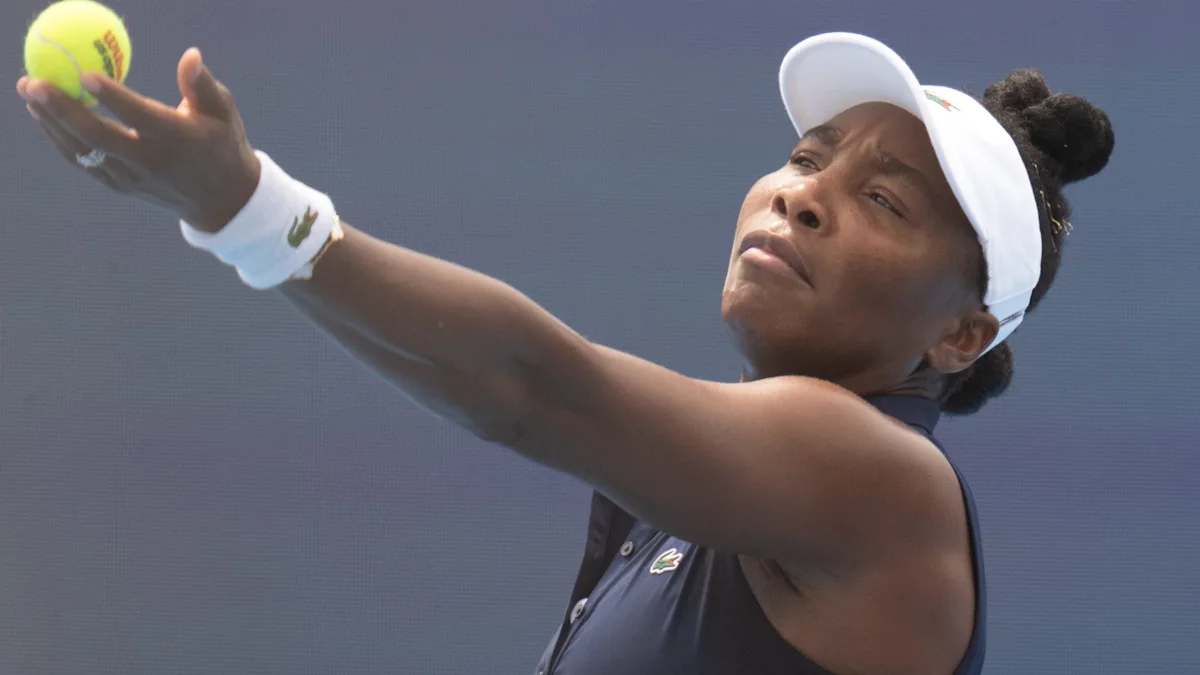

Venus Williams Suffers 13th Straight Loss of 2026 Season at Guangzhou Open
Tennis legend Venus Williams saw her winless 2026 campaign continue on Tuesday with a 6-2, 6-2 first-round defeat to 18-year-old Austrian qualifier Lilli Tagger at the Guangzhou Open. The straight-sets loss extends the American’s singles losing streak to 13 consecutive matches this season and 16 overall dating back to July 2025, raising pointed questions about her continued participation in WTA singles events.
Guangzhou Defeat Extends Historic Losing Streak
Williams, a seven-time Grand Slam singles champion and former world No. 1, entered the Chinese tournament on a wildcard—her 13th such entry of the year. Despite the tournament’s generous allocation, the 44-year-old has yet to record a singles victory in 2026. Her last WTA Tour singles win came in July 2025, marking a drought that now spans more than eight months and two calendar years.
The match against Tagger, currently ranked outside the top 300, lasted just 68 minutes. The teenager dominated from the baseline, breaking Williams’ serve five times while losing her own only once. The scoreline mirrored several of Williams’ recent outings, where she has struggled to generate consistent offense or defend against younger, faster opponents.
“This is getting sad. She doesn’t even need the money.”
Fan Criticism Intensifies Across Social Media
The Guangzhou defeat triggered a wave of commentary across platforms including Reddit and X (formerly Twitter), where fans and observers questioned the wisdom of Williams continuing to accept wildcards into singles draws. Critics argued that her presence blocks opportunities for rising players while producing results that many describe as increasingly difficult to watch.
Several fans called on tournament directors to stop awarding wildcards to the veteran, suggesting that her legendary status—while undeniable—should not guarantee entry into competitive draws when current form falls far below tour standards. Others expressed discomfort at what they perceive as a prolonged, public decline for an all-time great.
Not all reaction was negative. Longtime supporters emphasized Williams’ autonomy to decide her own schedule and noted her continued excellence in doubles, where her court sense and volleying remain sharp.
Doubles Success Offers Contrast in Guangzhou
Hours after her singles exit, Williams partnered with Indonesian player Janice Tjen to win their opening-round doubles match in straight sets. The victory highlighted a recurring pattern in Williams’ recent seasons: while singles results have deteriorated, her doubles game—built on anticipation, touch, and net prowess—remains competitive at the WTA level.
Williams has captured 14 Grand Slam women’s doubles titles (all with sister Serena) and three Olympic gold medals in doubles. Her current doubles ranking, while modest compared to her peak, still allows her to compete effectively when paired with a steady baseline partner.
| Tournament (2026) | Result (Singles) | Entry Type |
|---|---|---|
| ASB Classic (Auckland) | Lost R1 to Magda Linette | Wildcard |
| Guangzhou Open | Lost R1 to Lilli Tagger | Wildcard |
| [11 other tournaments] | First-round losses | Wildcards |
Williams on Motivation: “I Love the Process”
In a September interview with Town & Country magazine, Williams addressed the question that many fans and commentators have been asking: why keep playing when the results aren’t there? Her answer focused not on outcomes but on the daily grind that defines a professional athlete’s life.
“Oh man, it’s so fun. Also, winning is fun, but also the process is really fun. There’s so many hours that go on the court and in the gym and so much that goes on before you even play a match. I love the process, and I think it feels good when you do all the work and you start to see it happen. And that starts to happen with practice, not in the match. I love that part, the satisfaction.”
The perspective reflects a mindset that has sustained Williams through a career spanning more than three decades. She turned professional in 1994 at age 14 and has navigated injuries, illness (including Sjögren’s syndrome diagnosed in 2011), and the natural aging process while accumulating 49 WTA singles titles and over $42 million in prize money.
2026 Season Context: A Year of Wildcards and First-Round Exits
Williams began her 2026 campaign on January 6 at the ASB Classic in Auckland, where she fell to Poland’s Magda Linette in the opening round. Since then, she has appeared in 12 additional tournaments—each via wildcard—without advancing past the first round. The pattern has been remarkably consistent: competitive first sets occasionally, followed by decisive second-set drop-offs as opponents adjust and Williams’ level dips.
Tournament directors have continued to offer wildcards based on Williams’ drawing power and historical significance. Her presence boosts ticket sales, media attention, and sponsor visibility. But the arrangement has drawn scrutiny from player advocates who argue that development spots should go to younger athletes on the cusp of breakthroughs.
Wildcard Debate: Opportunity vs. Development
The wildcard system exists to give tournaments flexibility in field composition—allowing them to accommodate local favorites, returning champions, or marketable veterans. But when a player of Williams’ stature accepts 13 wildcards in a single season without a win, the practice edges into controversy. The WTA has no rule limiting wildcard allocation to a specific player, leaving the decision entirely to tournament organizers.
Some observers have suggested a middle path: Williams could request wildcards only for doubles events, where she remains competitive, while focusing singles preparation on lower-tier ITF events or exhibitions. Others believe the decision rests solely with Williams and her team.
Historical Perspective: Longevity Without Precedent
No female player in the Open Era has competed at the WTA level into her mid-40s with anything resembling regularity. Kimiko Date-Krumm reached the top 50 at age 42 before retiring in 2017. Serena Williams played her final singles match at age 40. Venus, now 44, is in uncharted territory—especially for a player who has not adapted her game to rely on serve-and-volley or tactical variety that might offset diminished movement.
Her continued pursuit of a 50th career singles title—a milestone that would place her alone in ninth place on the all-time list—remains a stated goal. But with each loss, the statistical probability diminishes further.
What Comes Next for Venus Williams
Williams’ immediate schedule remains unclear. She has not publicly announced whether she will continue accepting wildcards for the remainder of the 2026 season, which includes the Asian swing, potential European indoor events, and the year-end WTA Finals qualifying period. Her doubles partnership with Tjen in Guangzhou suggests at least a partial commitment to the current swing.
Off the court, Williams continues to expand her business ventures, including her EleVen activewear line and V Starr interior design firm. She has also taken on mentorship roles, working with younger American players through USTA development programs.
Whether she plays another singles match in 2026 or pivots fully to doubles, exhibitions, and off-court endeavors, Venus Williams’ place in tennis history is immovable. The current chapter—painful as it may be for fans to watch—is simply the final act of a career that rewrote what was possible for women in sport.
Sports, Tennis, WTA, Venus Williams, Guangzhou Open, Lilli Tagger, Wildcard, Losing Streak, Doubles, Town & Country, ASB Classic, Magda Linette, Janice Tjen, EleVen, V Starr, Sjögren’s Syndrome, Kimiko Date-Krumm, Serena Williams, Professional Tennis, Athlete Longevity, Wildcard Controversy, Sports Business, Women’s Sports, Tennis Legends, Grand Slam Champions, Olympic Gold Medalists, American Athletes, Sports Media, Fan Reaction, Social Media Criticism, Tournament Directors, Player Development, Career Milestones, Athletic Decline, Motivation, Process Over Outcome


