

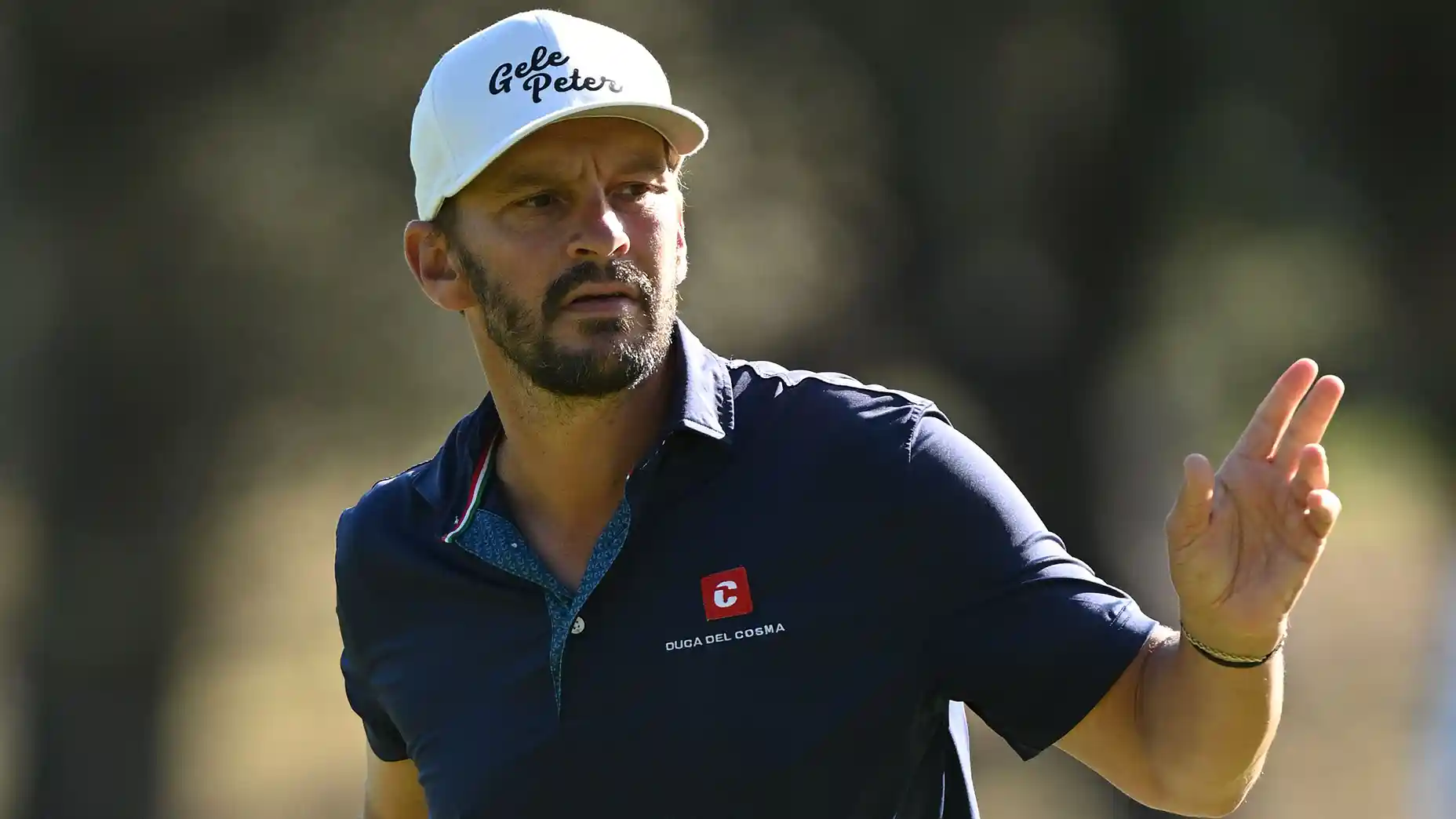

Luiten Rips DP World Tour’s Open-Door Policy for LIV Defectors as McIlroy Backs the Ban
The civil war in professional golf has entered a new phase, and the fault lines are no longer just between the PGA Tour and LIV Golf. They’re opening up within the DP World Tour itself. Six-time winner Joost Luiten has launched a blistering attack on his own circuit’s decision to welcome back LIV Golf defectors in 2027, arguing the tour is betraying the players who stayed loyal while the Saudi-backed league raided its ranks.
Luiten’s Blistering Critique: ‘They Didn’t Give a S—’
Speaking to Ben Parsons of Today’s Golfer, the 40-year-old Dutchman didn’t mince words. “Four years ago they didn’t give a s— about the DP World Tour,” Luiten said of the players who departed for LIV’s guaranteed riches. “They made a decision to go after the money. And now all of a sudden, the money is gone and they want to come back and act like nothing happened. I don’t think that’s right.”
The reference to money drying up alludes to LIV Golf’s widely reported financial restructuring—though reports of formal bankruptcy proceedings remain unconfirmed by LIV or its backer, the Public Investment Fund of Saudi Arabia. What is clear: multiple LIV players have signaled interest in returning to traditional tours once their contracts expire, and the DP World Tour has effectively rolled out a welcome mat.
“Why give them invites? If I apply for an invite if I’m not in a tournament, I’m not going to get it because it’s all going to the LIV guys. There’s only a certain amount of invites. Invites should be for young talent coming through and not guys that took the piss against this tour and now they want to come back and they get invites.”
Luiten’s core grievance is structural: sponsor exemptions and limited tournament spots that once went to emerging talent or loyal veterans will now be absorbed by returning LIV names—players who, in his view, forfeited their moral claim to those opportunities the moment they signed with the rival league.
The DP World Tour’s 2027 Ban: What Actually Changed
The tour’s policy shift, announced in mid-2024, bars players who sign with “LIV 2.0″—whatever form the league takes after its current iteration—from competing in DP World Tour events starting in 2027. But crucially, it does not penalize current LIV members who simply let their contracts expire. They can return freely provided they’ve paid outstanding fines and haven’t re-upped with the breakaway circuit.
This creates a stark asymmetry with the PGA Tour, where defectors face a mandatory one-year suspension followed by requalification through standard channels—no guarantees, no invites, no special treatment. The DP World Tour’s approach has been framed by leadership as a pragmatic business decision: keep the product strong by retaining access to elite talent, even if that talent briefly defected.
| Tour | Return Path for LIV Defectors | Effective Date |
|---|---|---|
| DP World Tour | No ban if contract expires; must pay fines; banned only if signing new LIV deal | 2027 |
| PGA Tour | One-year suspension + requalification through standard process | Ongoing |
McIlroy’s Divergent Stance: Business Over Grievance
Rory McIlroy, the tour’s most visible star and a seven-time Race to Dubai champion, sees it differently. At the DP World India Championship, he backed the board’s decision unequivocally: “The DP World Tour are well within their rights to change the rules and regulations. This is the way to protect their business and to make the tour as strong as possible.”
Days earlier at the Bloomberg New Economy Forum, McIlroy went further, advocating for LIV returnees on both major tours: “I think a rising tide lifts all boats. And I think having some of these players back is beneficial for the business of the tours.”
The disconnect is palpable. McIlroy’s exemption status is ironclad; his tournament schedule, world ranking, and earnings are insulated from the influx of returning stars. For Luiten—ranked 67th in the Race to Dubai, on the back nine of his career, fighting for every start and every euro—the calculation is existential.
The Economic Stakes for Journeyneymen
Luiten’s position illuminates a class divide in professional golf that rarely makes headlines. The top 20 players in the world operate in a different economy than those ranked 50th through 150th. For the latter, a single sponsor exemption can mean the difference between retaining a card and scrambling through Q School.
“There should be a rule that if you gave up your membership you lose all your exemption rights as well,” Luiten argued. “Then you have to stay a member if you want to ever come back to this tour. A lot of the guys gave up their membership and now they come back like nothing happened and then they become a member again and they get all the rights that they had before they left.”
His proposed remedy is blunt: send them to Q School. “If they think that they are that good then show it at Q School and beat the guys. That’s how every other guy that wants to play on this tour has to go.”
Q School or Open Arms? The Precedent Problem
The tension Luiten identifies isn’t unique to golf. Across sports, leagues wrestle with how to handle defectors who return after a rival venture collapses or loses steam. The NFL’s handling of USFL players in the 1980s, the NHL’s absorption of WHA franchises, and more recently, the Premier Golf League’s abortive attempt—all involved negotiations over what “credit” defectors retained.
But golf’s independent-contractor model complicates things. Players aren’t employees; they’re members who voluntarily relinquished membership. The DP World Tour’s decision to restore full rights without requalification sets a precedent: leaving for money carries no long-term competitive penalty, provided you don’t sign a second contract with the rival.
That calculation will not be lost on the next generation of players weighing a lucrative offer against tour loyalty.
What This Means for Golf’s Fractured Future
The DP World Tour’s 2027 ban is being read in some quarters as a strategic hedge—a signal to the PGA Tour and the PIF that the European circuit intends to survive whatever unification deal eventually materializes. By keeping the door open for individual players while barring the entity of LIV 2.0, the tour positions itself as both a landing spot and a leverage point.
The Loyalty vs. Business Tension
Luiten’s anger reflects a sentiment shared privately by many rank-and-file professionals: that the tours’ leadership prioritizes commercial partnerships and star power over the competitive integrity that sustains the broader membership. McIlroy’s “rising tide” argument assumes the returning players expand the pie. Luiten’s lived experience suggests they merely reshuffle the slices—often at the expense of those who never left.
A Fractured Landscape
As of late 2024, the PGA Tour and PIF remain in negotiations over a framework agreement first announced in June 2023. The DP World Tour is a signatory to that framework but retains independent governance. Its 2027 policy may ultimately be overtaken by a global settlement—or it may become the template for how a post-unification golf world handles the defectors who want back in.
For now, Joost Luiten has articulated what many won’t say on the record: that loyalty, in professional golf, currently carries a price tag—and the tour has decided it’s not worth paying.
Sports, Golf, DP World Tour, LIV Golf, PGA Tour, Professional Golf, European Tour, Joost Luiten, Rory McIlroy, Golf Politics, Sports Business, Athlete Loyalty, Golf Rankings, Race to Dubai, Q School, Sponsor Exemptions, Golf Civil War, Saudi Arabia PIF, Golf Unification, Controversial, Critical, News


