


Preparing for the 2026‑27 Respiratory Virus Season: Vaccine Guidance for Flu, COVID‑19 and RSV
As temperatures drop, public health officials turn their attention to the annual rise of influenza, COVID‑19 and respiratory syncytial virus (RSV). The Centers for Disease Control and Prevention (CDC) projects that the 2026‑27 season will see a similar burden of peak hospitalizations from these three viruses as observed in the previous year. Vaccination remains the cornerstone of protection, and updated recommendations clarify who should receive each vaccine, which formulations are available, and the optimal timing for immunization.
Flu Vaccine: Who Should Get It and Which Types Are Available
The CDC advises that everyone aged six months and older receive an annual influenza vaccine. The seasonal shot protects against the three strains most likely to circulate: an A(H1N1) virus, an A(H3N2) virus and a B/Victoria virus. Several vaccine platforms are offered this season:
- Standard‑dose inactivated vaccines (egg‑based or cell‑culture) – suitable for anyone as young as six months.
- High‑dose and adjuvanted inactivated vaccines – egg‑based formulations reserved for adults 65 years and older, who face a higher risk of severe flu.
- Recombinant flu vaccine – produced without eggs, approved for persons nine years of age and older.
- Nasal spray (live attenuated) vaccine – an option for healthy, non‑pregnant individuals aged two through 49 years who do not have certain high‑risk conditions.
- Moderna’s mRNA seasonal flu vaccine – approved in August 2025 for adults 50 years and older.
Dosing guidance notes that children aged six months through eight years may need two doses if they have not previously received at least two flu vaccine doses; a single dose suffices for those nine years and older, as well as for children in the younger age group who have already been fully vaccinated in prior seasons.

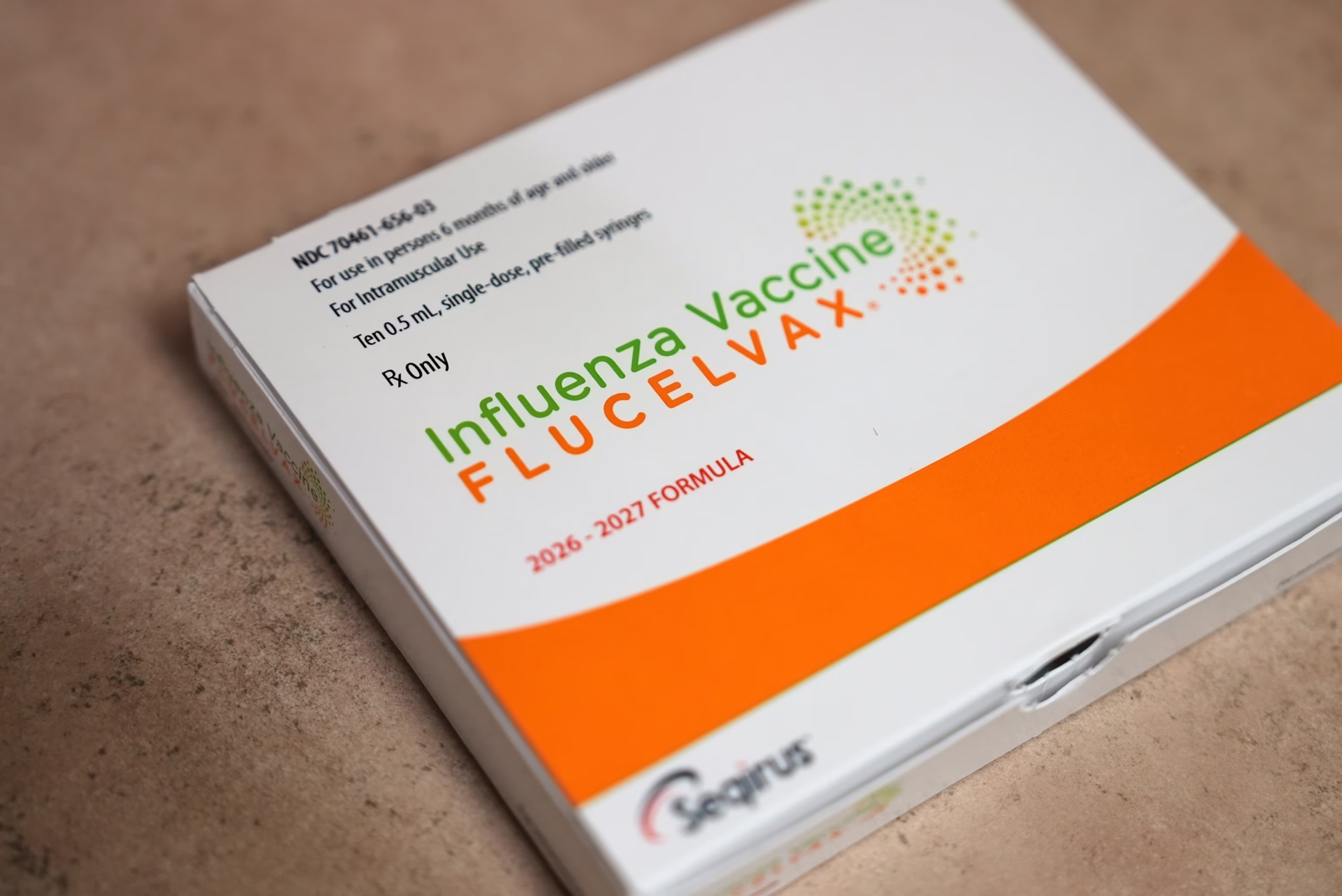
A box of flu vaccines is displayed at a pharmacy in New York, Sept. 15, 2026.
Mary Conlon/AP Photo
COVID‑19 Vaccine: Updated Formulations and Eligibility
For the 2026‑27 season, the CDC recommends that all individuals aged 18 years and older receive an updated COVID‑19 vaccine. Children aged six months through 17 years who are at increased risk for severe disease should also be vaccinated; parents of other children are encouraged to discuss the vaccine with their pediatrician.
The mRNA vaccines from Moderna and Pfizer have been reformulated to target the XFG strain, a recombinant Omicron variant that emerged from the combination of two Omicron subvariants. Availability details include:
- Moderna mRNA vaccine – authorized for persons six months through 64 years with an underlying medical condition, and for all adults 65 years and older. A lower‑dosage Moderna mRNA vaccine is available for anyone aged 12 years and older.
- Pfizer mRNA vaccine – approved for individuals five years through 64 years with an underlying condition, and for all adults over age 65.
- Novavax protein‑based vaccine – an alternative for those aged 12 years and older.
Health experts note that receiving the flu and COVID‑19 vaccines during the same visit is safe for eligible individuals; if preferred, the two shots can be spaced about a week apart.

A box of COVID-19 mRNA vaccines is displayed at a pharmacy in New York, Sept. 15, 2026.
Mary Conlon/AP Photo
RSV Vaccine: Recommendations for Older Adults, Pregnant People and Infants
Respiratory syncytial virus poses a significant threat to infants, older adults and those with certain medical conditions. The CDC’s RSV vaccination guidance for the 2026‑27 season includes:
- Adults 75 years and older – recommended to receive a single dose of the RSV vaccine.
- Adults aged 50 through 74 years who are at increased risk for severe RSV (e.g., due to chronic heart or lung disease, immunosuppression) should also be vaccinated.
- Pregnant individuals between 32 and 36 weeks’ gestation are advised to receive the RSV vaccine to provide passive protection to their newborns.
For infants under eight months who are entering their first RSV season and whose mothers did not receive a maternal RSV vaccine, two doses of a monoclonal antibody product are available. These lab‑made proteins mimic the antibodies the body generates during infection and offer short‑term protection. A small subset of children aged 8‑19 months with heightened risk may also qualify for monoclonal antibody therapy.

A box of RSV vaccine is displayed at a pharmacy in New York, Sept. 24, 2024.
Mary Conlon/AP
Timing and Best Practices for Getting Vaccinated
Public health officials encourage people to obtain their flu shot by the end of October, though vaccination later in the fall or winter remains beneficial as long as influenza viruses are circulating and the vaccine has not expired. The same timing advice applies to the updated COVID‑19 vaccine; many clinicians suggest administering both vaccines during the same visit or spacing them about a week apart to simplify scheduling.
For RSV, the monoclonal antibody doses for infants are typically given shortly before or at the start of the RSV season, while the maternal vaccine is administered during the specified window of pregnancy to maximize antibody transfer to the fetus.
Debunking Common Myths About Vaccine Safety
A frequent misconception is that receiving a flu shot can cause influenza. Experts clarify that injectable flu vaccines contain only inactivated pieces of the virus or a single recombinant protein; they cannot replicate and therefore do not cause the illness. Any flu‑like symptoms experienced shortly after vaccination are usually the result of exposure to the virus before immunity has developed—protection typically takes about two weeks to become effective.
Similar misunderstandings surround COVID‑19 vaccines, which also do not contain live SARS‑CoV‑2. The mRNA platforms merely instruct cells to produce a harmless piece of the spike protein, prompting an immune response without causing disease.
By staying up to date on the recommended vaccines for flu, COVID‑19 and RSV, individuals can substantially lower their risk of severe illness, hospitalization and complications during the upcoming respiratory virus season.
Health, Science, News, Government, Influenza, COVID-19, RSV, Vaccination, Respiratory Virus Season 2026-27