

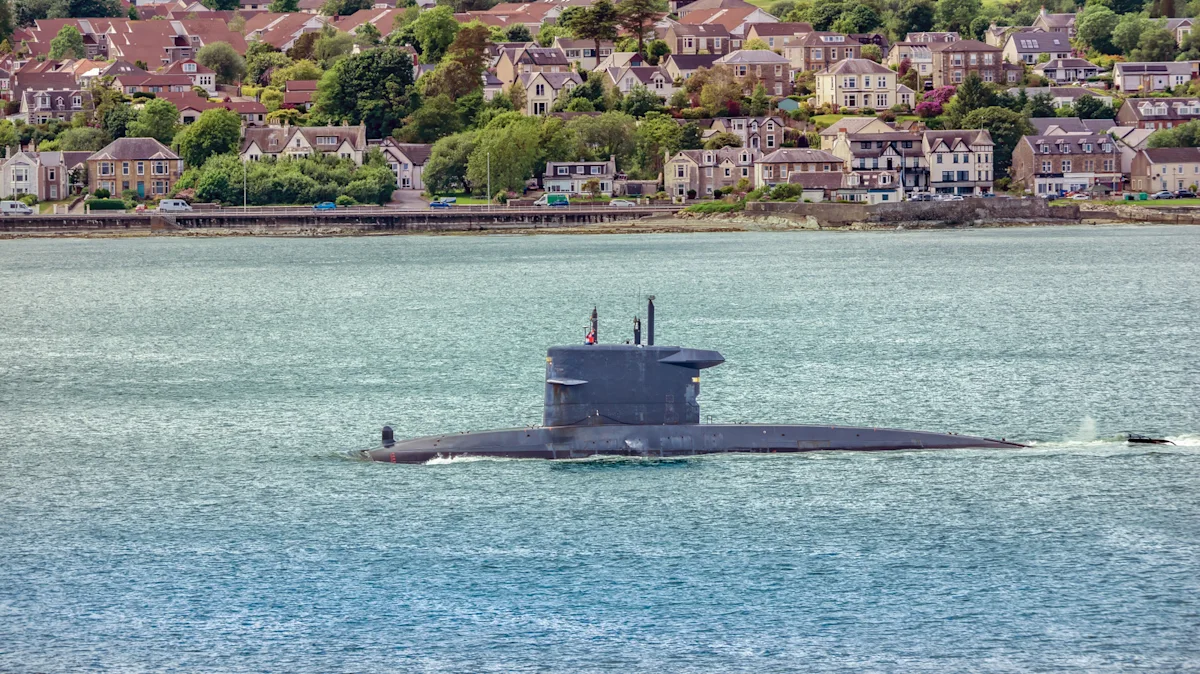

Britain Unveils Massive Plan to Revolutionize Faslane Submarine Maintenance Facilities
Servicing an advanced nuclear-powered submarine requires careful, expensive work. For the United Kingdom’s Royal Navy, this means solving a severe maintenance bottleneck at its primary submarine base in Scotland before the new Dreadnought-class vessels arrive. To achieve this critical modernization, the government has announced a staggering £6 billion investment to construct three floating dry docks at Faslane. This represents a pivotal step in ensuring the fleet’s operational readiness, blending advanced naval engineering with economic strategy.
As the next generation of undersea capabilities grows increasingly intricate, traditional docking infrastructure in Scotland’s Faslane is showing its age. Without adequate servicing capacity, the Royal Navy risks significant delays in inspecting and repairing its stealth submarines, potentially undermining the strategic value of highly advanced vessels designed for modern warfare. By building modular, mobile docking bays, the UK aims to fundamentally shift how its navy maintains its underwater fleet.
The Aging Infrastructure Problem at Faslane
Currently, Faslane relies heavily on a single, aging ship lift capable of taking the newest submarines out of the water for routine maintenance. That facility is deteriorating, creating a serious service backlog that threatens the timely availability of the fleet. “We have to fix this,” naval officials have stated, emphasizing that merely bolting on more permanent docking stages will take decades to materialize. The timeline is too long, and the budget is too constrained. Floating dry docks provide the solution by offering immediate capacity expansion.
A £15 Billion Overall Investment
While the investment for the new floating docks is £6 billion, the total project cost spans an even larger £15 billion (€20 billion USD). The substantial remainder will fund Faslane’s entire supporting ecosystem. This includes crucial dredging and blasting to ensure optimal water depth for the docks, alongside vital expansions for electricity, water supply, telecommunications, shore access, and security infrastructure.
Why Floating Over Fixed? Unlike traditional dry docks built into the shoreline, these floating structures offer unmatched mobility. They can lower into the water, drain the surrounding area, and allow workers direct access to the submarine hull, while remaining fully deployable anywhere the Royal Navy requires them.
Enhancing Fleet Readiness and Operational Availability
The core strategic goal of this massive investment is to restore and improve the fleet’s operational availability. Expanding servicing capacity ensures that advanced submarines can undergo vital hull inspections and engine repairs without waiting months for a ship lift to become available. This guarantees that the UK’s next-generation fleet remains combat-ready, protecting national security against emerging threats that require constant sea dominance.
Sustaining the UK Shipbuilding Ecosystem
Beyond military necessity, the floating dock project serves as a major economic engine for the UK. By prioritizing British-based shipbuilders for the construction contracts, the government ensures that billions in taxpayer money directly supports local industries. This boosts employment in high-skill manufacturing sectors and secures the UK’s long-standing expertise in complex naval engineering, turning a military expense into a robust industrial catalyst.
Looking Ahead: Future-Proofing the Fleet
With these new facilities expected to enter service in the early 2030s, ahead of the arrival of the massive Dreadnought-class submarines, the Royal Navy will possess the capacity to support both legacy and next-generation assets. The flexibility of a floating dock means that future technological advancements or shifting operational demands can be accommodated without requiring entirely new, prohibitively expensive fixed infrastructure. This forward-thinking approach positions the UK to maintain a formidable blue-water navy well into the coming decades.
For the United Kingdom, investing in state-of-the-art marine maintenance infrastructure is far more than a budget line item—it is a strategic imperative. As technology evolves, so must the tools required to sustain it. By modernizing Faslane, the UK is securing the operational backbone of its nuclear deterrent for generations to come.
News, Government, Transportation, Society, Vehicles


