


81 US Military Aircraft Destroyed or Damaged in Iran War, CRS Report Reveals
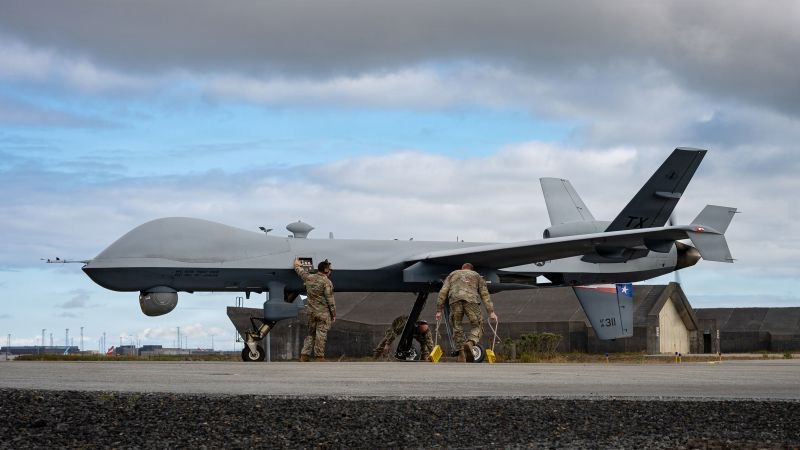
The United States military has had 81 aircraft destroyed or damaged in the war with Iran, according to a Congressional Research Service report released recently. The figure encompasses airplanes, helicopters, and drones, with the MQ-9 Reaper drone — used for intelligence, surveillance, reconnaissance, close air support, and combat search and rescue — accounting for more than half of the losses.
Pentagon’s Most-Prized Assets Among Losses
The report includes some of the Defense Department’s most-valuable platforms. An F-35A fighter jet and an E-3 Sentry — the four-engine jet with a large radar dome atop the fuselage used for target tracking and airspace management — are both on the list of destroyed or damaged aircraft.
Staggering Cost of Aircraft Losses
The total cost of the aircraft lost ranges between $1.9 billion and $3.3 billion, depending on the Defense Department’s plans for replacements, the report said, citing figures from the Congressional Budget Office.
Key Figure: The total cost of the Iran war is much higher — at least $45 billion, sources have told CNN. That figure does not include damage to infrastructure at US bases in the region, including those where some of the aircraft losses occurred.
Some Aircraft Returned to Service
Not all losses are permanent. Some of the aircraft included in the count may have been returned to service, including eight F-15 Strike Eagle fighter jets that sustained light damage in an Iranian strike on Muwaffaq Salti Air Base, Jordan, in September.
Congressional Questions and Reporting Gaps
The report poses several questions for congressional consideration, including whether lawmakers are getting enough information from the Pentagon on the losses to determine effects and remedies. Defense Department reporting on Iran war losses has, to date, been vague. Even the Pentagon inspector general’s report on the losses, released in September and covering action from February 28 to June 30, cites previous CRS reports for some of its aircraft loss numbers.
Other issues Congress needs to think about include whether to provide funding for repairs or replacements; whether there is enough industrial capacity to satisfy those requirements; and the effects on US military sales to foreign partners. The report also raises questions about how the Iran war has affected US posture outside the Middle East.
“Congress may assess whether losses in certain high-demand platforms that are aging and limited in number, such as the E-3 Sentry, create capability gaps or increase risk in other theaters,” the report says.
MQ-9 Drones: The Heaviest Toll
Analysts have said actions in the Middle East, including the Iran war and earlier confrontations with the Houthi rebels in Yemen — an Iranian proxy group — have taken an especially heavy toll on the MQ-9 drones. Air Force Chief of Staff Gen. Kenneth Wilsbach told Congress earlier this year that the drone was the military’s “most valuable player” in the war with Iran.
Forty-five have been lost in the Middle East this year, “an alarming rate,” according to a September report from the Atlantic Council. The Air Force has lost about 35% of its MQ-9s since 2004, it says.
Report Sources and Methodology
The CRS report is based on numbers contained in statements from the Defense Department; its inspector general; US Central Command, which has been conducting the operations against Iran; and news reports reviewed by the Congressional Research Service.
Conclusion: A Drain on Military Readiness
The cumulative loss of 81 aircraft — including advanced stealth fighters, airborne warning systems, and nearly half the Reaper drone fleet — represents a significant strain on US military capabilities. With replacement costs running into billions and industrial capacity questions unresolved, the Iran war’s impact on American military posture continues to unfold, raising urgent questions for Congress about funding, readiness, and the long-term strategic balance in the region.
Arts, Autos, Business, Computers, Defense, Electronics, Entertainment, Finance, Government, Industrial, Internet, Jobs, Law, News, Online, People, Politics, Science, Shopping, Society, Sports, Telecom, Transportation, Travel, Vehicles