

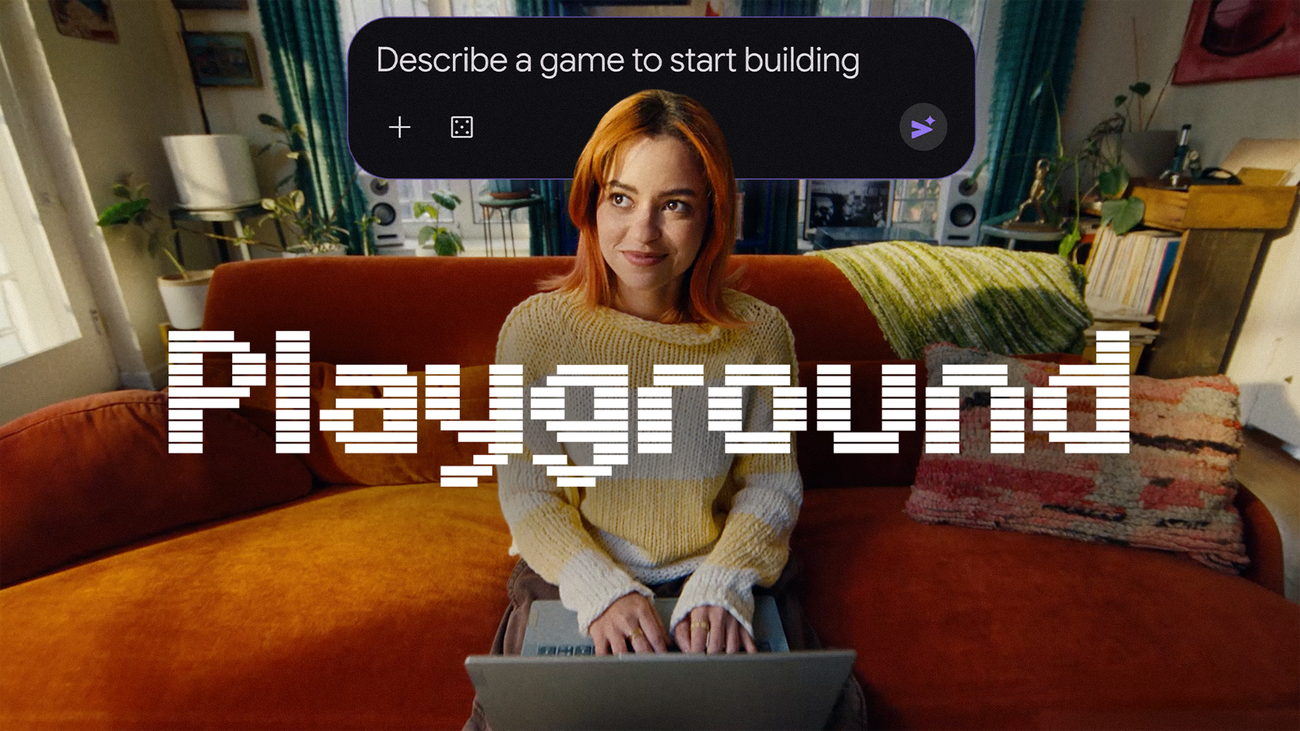

New Platform Playground Lets Anyone Build Games With Prompts
Games have long been recognized as one of the most creative forms of modern expression, and the audience for them continues to expand at a rapid pace. Yet, for decades, the act of making those games remained gated behind technical walls. Building a playable experience historically required proficiency in complex game engines, a grasp of mathematics, and significant coding experience—barriers that kept the vast majority of creative ideas sitting unbuilt.
That dynamic is shifting with the introduction of Playground, an experimental gaming platform designed to lower the threshold for creation. By moving away from traditional scripting toward a conversational interface, Playground aims to make bringing game ideas to life as straightforward as describing them through a few prompts. For aspiring creators who have never written a line of code, this represents a fundamental change in who gets to shape digital play experiences.
What Is Playground? An Experimental Gaming Platform
At its core, Playground is a creation suite built around three verbs: create, play, and share. Unlike traditional development environments that demand users navigate menu-heavy toolbars and asset libraries, this platform is built on the assumption that a creator’s primary language is natural language. The system is currently positioned as an experimental tool, which signals that iteration and community feedback are central to its ongoing development.
“Playground lowers the barriers to creation, so bringing game ideas to life can now be as easy as describing it through a few prompts — no coding experience required.”
This approach aligns with the broader trajectory of generative technology in software. Just as AI tools have begun assisting with writing, coding, and design, Playground is applying those capabilities specifically to interactive systems. The platform does not merely generate static assets; it constructs the logic and interactivity that define a game, allowing users to experience their concepts almost instantly.
How the Conversational Interface Works
The workflow on Playground is centered on typing what you want to build rather than clicking through menus. This conversational model handles the translation from concept to code behind the scenes, allowing the user to maintain a high-level creative vision while the system manages the implementation details.
Starting Points for Every Skill Level
Users are not forced to begin in a void. The platform supports three distinct entry points:
- Blank Canvas: For users who want full control and wish to dictate every initial element of the game world.
- Remix Starter Prompts: A library of existing concepts that users can adapt and modify to fit their own vision.
- Guided Support: Structured assistance that helps shape a rough idea into a workable concept.
Once a concept is established, testing happens immediately. This rapid feedback loop is critical for game design, where the fun factor often cannot be predicted on paper. Seeing a game playable within moments of typing the prompt fundamentally changes the debugging process, turning it into a continuous creative conversation.
From Concept to Playable Prototype in Minutes
One of the most significant claims of the platform is the ability to refine a game through direct commands. In traditional engines, changing a mechanic might involve rewriting scripts, recalibrating collision boxes, and recompiling assets. On Playground, this interaction is simplified into natural language requests.
Customizing Physics, Rules, and Characters
The system allows creators to issue specific directives over the game’s underlying systems. Want to tweak the physics so objects bounce higher? Rewrite the win conditions so the goal changes mid-level? Customize the appearance or behavior of characters? The platform is designed to handle these requests as edits rather than as redevelopment projects. This ensures the user stays in complete control of the creative direction, from the initial rough concept to the final polished product.
Why No-Code Game Creation Changes the Landscape
The barrier to entry in game development has never been about talent; it has been about technical friction. Millions of people possess the imagination to design a game but lack the years of training required to operate professional authoring tools. Playground addresses this gap by removing the syntax requirement entirely.
| Aspect | Traditional Game Development | Playground Conversational Creation |
|---|---|---|
| Interface | Engine menus, asset browsers, script editors | Natural language prompts and typing |
| Technical Skill | Requires coding and engine expertise | No coding experience required |
| Iteration Speed | Slow; requires recompiling and debugging | Immediate; ask and test right away |
| Ownership | Direct control over low-level systems | Complete control over creative direction |
This democratization does not diminish the value of professional skill; rather, it redistributes who can participate. It opens the field to storytellers, designers, and enthusiasts who would previously have been unable to translate their ideas into interactive form. As the tool matures, the distinction between “player” and “creator” in the gaming community is likely to blur further.
The Future of Creator-Led Gaming
The ability to share custom games is a key component of Playground’s vision. A platform that only allows creation in isolation would not fulfill the promise of the gaming community’s growth. By enabling sharing, the platform creates a network where one user’s prompt can inspire another’s remix, accelerating the rate of innovation.
While the platform is currently experimental, the implications are substantial. If prompt-based creation becomes reliable enough to produce polished, engaging experiences, the industry could see a surge in niche genres and experimental mechanics that were never viable under the cost structures of traditional production. The gaming community keeps growing, and Playground appears designed to ensure that the people making the most of that growth are not just the most technically trained—but the most creative.
Games, Internet, Computers, Electronics, Entertainment, Online, Hobbies, Generative AI, No-Code Development, Game Design, Creative Tools, Positive


