

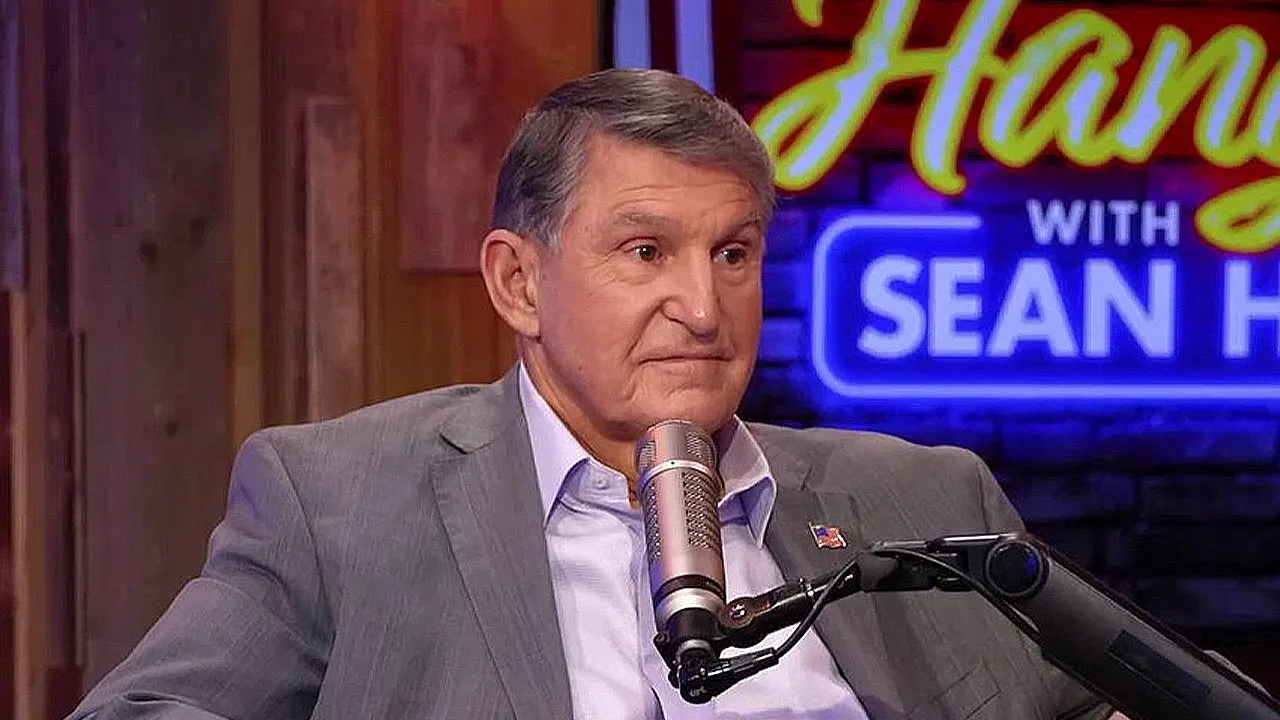

Joe Manchin Slams Political Extremes, Warns Democratic Socialists Are Gaining Ground in Hannity Interview
Former West Virginia Senator Joe Manchin is warning that political extremism on both the left and right is failing ordinary Americans, and he argues that the Democratic Party’s growing embrace of progressive and democratic socialist voices is pushing moderates out. In a preview of his appearance on Sean Hannity’s podcast, “Hang Out with Sean Hannity,” Manchin said the silent majority still holds the common-sense middle ground and urged voters to speak up against extreme forces.
The remarks follow Manchin’s decision to leave the Democratic Party and register as an independent in May 2024. During his conversation with Hannity, the former senator offered a candid assessment of the party’s direction and the electoral consequences he believes could follow if centrist voices continue to be sidelined.
Manchin Traces Party Shift From Liberals to Progressives to the DSA
“That’s why I’m an independent,” Manchin said on the podcast. He described what he sees as a steady ideological migration within his former party: “[Members of the Democratic Party] went from liberal to progressives to DSA. It just keeps going on that trend.”
The reference to the Democratic Socialists of America captures a specific concern Manchin raised about the party’s activist wing. He said he finds it difficult to understand why many longtime Democrats appear unwilling to challenge the organization’s growing influence, suggesting some may be reluctant to confront the party’s more progressive flank.
“I had seen both the Democrat and Republican parties leave West Virginia and our country behind for partisan extremism while jeopardizing our democracy.”
— Joe Manchin, statement announcing his departure from the Democratic Party
‘That’s Why I’m an Independent’: Manchin on Leaving the Democratic Party
Manchin’s break with the Democratic Party followed years of tension with party leadership. As a senator from West Virginia, he frequently cast pivotal votes on major legislation and became one of the most visible moderates in Congress. His May 2024 departure was framed as a rejection of partisan extremism rather than an endorsement of the Republican Party.
Speaking with Hannity, Manchin presented his independence as a reflection of broader voter frustration. He argued that neither major party is willing to find common ground or put country before party, and he called on Americans to push back against the extremes driving national politics.
Hannity Interview Highlights Electoral Stakes and Progressive Gains
Manchin connected his concerns directly to upcoming congressional elections, suggesting that shifts in House control could play out in competitive districts rather than safely blue or red territory. “If the House changes … if it flips over to Democrat control, a lot of the flipping is going to happen in kind of a purple area, not a hard blue area,” he said. “[A] hard blue area is where they’re going to maybe flip to DSA.”
He also pointed to real-world evidence of the movement’s electoral progress. New York City Mayor Zohran Mamdani, identified in the report as a democratic socialist, was cited as an example of candidates from that wing winning high-profile office. For Manchin, such outcomes underscore the pressure facing traditional Democrats even in areas that might once have been considered friendly territory.
Moderates, Sinema, and the Fight for the Party’s Center
Manchin is not alone in questioning whether centrists still have a home in the Democratic Party. Former Senator Kyrsten Sinema has raised similar doubts about the party’s openness to moderate voices, while political strategist James Carville has weighed in on House dynamics and the influence of the DSA on Democratic electoral prospects.
Taken together, these comments reflect a broader anxiety among establishment figures that the party’s activist wing is reshaping its identity and electoral map. Manchin’s position is that the solution lies in restoring a politics of common ground rather than ideological purity.
What Comes Next for Manchin and the Political Center
Now operating as an independent, Manchin remains outside the formal structure of the two-party system, though his voice continues to shape national debates about centrism and polarization. His decision to appear on Hannity’s podcast signals a willingness to engage with conservative audiences while maintaining his criticism of both parties.
Whether moderates within the Democratic Party can regain influence—or whether more elected officials will follow Manchin’s path—remains an open question ahead of the next election cycle. His core message is unchanged: he believes the country’s future depends on voters rejecting political extremes and demanding that elected officials put the country ahead of party.
Fox News’ Chris Pandolfo contributed to this report.
Taylor Penley is an associate editor for Fox News Digital and contributor to FOX Business and Fox Nation who covers media, culture and Flash
News, Government, Society, People, Joe Manchin, Sean Hannity, Democratic Party, Democratic Socialists of America, West Virginia, Political Extremism, Independent Voters, U.S. Congress, Fox News


