

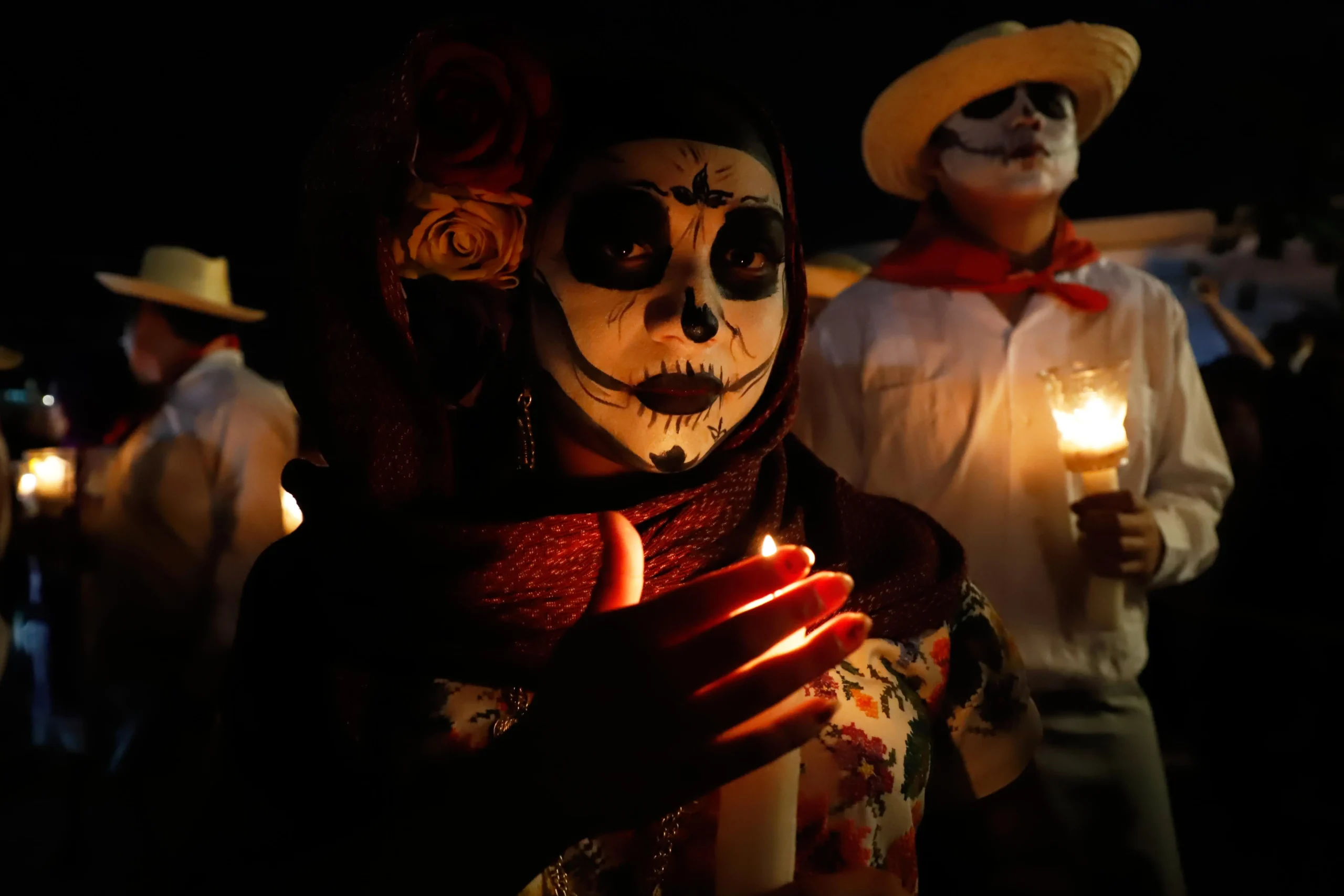

Day of the Dead: Mexico’s Vibrant Tradition Faces Growing Pains from Global Popularity
The annual Día de Muertos, or Day of the Dead, is one of Mexico’s most profound cultural celebrations, blending indigenous rituals with Catholic influences to honor deceased loved ones. As this festival gains international acclaim, it also confronts new challenges, including overtourism that threatens the authenticity and sustainability of time-honored traditions.
Roots and Rituals: The Essence of Día de Muertos
Originating from pre-Hispanic agricultural beliefs and later enriched by Spanish Catholic traditions after the 1521 conquest, Día de Muertos spans from late October into November 1 and 2. The festivities are characterized by vibrant orange cempasúchil flowers, which are believed to guide souls back to the living, and elaborate altars adorned with offerings of food, sweets, and mezcal. Families gather in cemeteries to clean graves, share stories, and welcome the returning spirits, creating a unique atmosphere that celebrates life and death together.
Modern Celebrations and International Spotlight
Today, Día de Muertos has transcended borders, drawing global audiences to massive parades and events. In Mexico City, a spectacular procession featuring catrina figures—elegant skeletal representations—has become a major attraction, though it was originally created for the 2015 James Bond film “Spectre” and is not a traditional element. UNESCO recognized the festival’s cultural significance in 2008, listing it as Intangible Cultural Heritage of Humanity, particularly highlighting traditions in states like Michoacán and Oaxaca. This international recognition has boosted tourism, but also sparked debates about commercialization and cultural preservation.
Overtourism Strains: When Popularity Meets Tradition
The surge in visitors has led to tangible problems in some communities. In Janitzio, a small island in Michoacán’s lake region, authorities closed the cemetery to tourists for the first time in recent years due to damaged tombs, crosses, and perimeter walls overwhelmed by crowds. Only local families and friends of the deceased are now permitted entry, reflecting a broader tension between economic benefits and cultural integrity. Similarly, Mexico City’s local residents have expressed skepticism about the annual parade, viewing it as a cinematic invention rather than an authentic part of their heritage.
Balancing Preservation and Promotion
As Día de Muertos continues to captivate the world, communities are grappling with how to protect its sacred roots while sharing its beauty. Efforts include community-led initiatives, visitor guidelines, and discussions on sustainable tourism. The goal is to ensure that this ancient tradition remains a meaningful, respectful celebration for both locals and travelers, preserving its essence for future generations.
Travel, Society, News, Entertainment, Government, Cultural Events, Mexico, Tourism, Overtourism, UNESCO Heritage


