


France’s First Pedagogical Cemetery Trains Funeral Professionals in Real-World Conditions
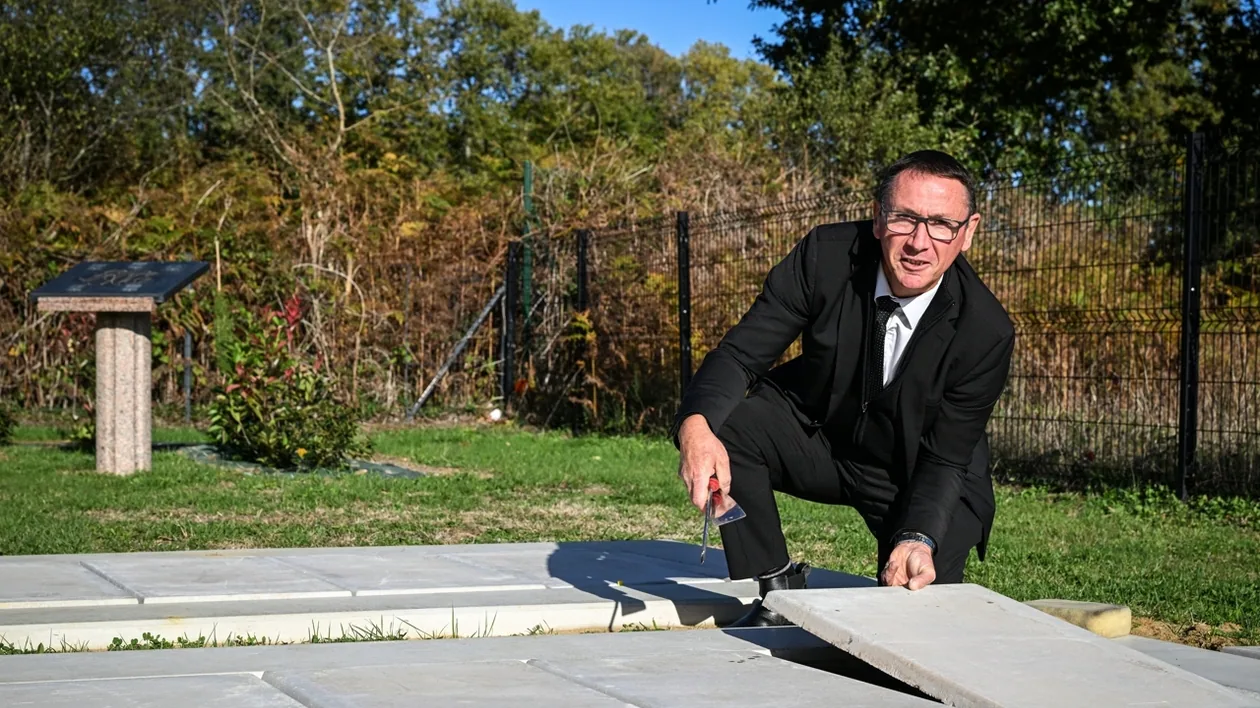
Behind the headquarters of Rivages Funéraire in Ruaudin, a commune just outside Le Mans in the Sarthe department, sits an unusual training facility: a grassy expanse of several hundred square meters dotted with tombs, vaults, and the occasional caw of circling crows. It looks like a cemetery. It functions like a cemetery. But no one is buried here. This is France’s first and only pedagogical cemetery, a purpose-built simulation ground where funeral professionals learn their craft under realistic conditions.
An Industry-Wide Training Gap
The concept originated with Christophe Nail, CEO of Rivages Funéraire, who recognized a persistent challenge in the funeral sector: most employees enter the field without specialized training. Pallbearers, ceremony masters, masons, and florists often learn on the job, relying on observation and informal mentorship rather than structured instruction.
“The concern is that we have to train everyone,” explains Jalil Khodja, the company’s communications director. “Notably the employees, often hired without specific training, who are tasked with transporting and carrying the coffin during funerals.” Until recently, Rivages relied on digital modules and shadowing experienced colleagues—methods that couldn’t replicate the physical demands and emotional weight of actual ceremonies.
Building a Cemetery for the Living
The pedagogical cemetery was designed to get as close as possible to a real cemetery
, according to Khodja. Every element—grave markers, burial vaults, landscaping, even the acoustic environment—mirrors what teams encounter during actual services. This allows staff to practice:
- Coffin handling and transport across varied terrain and through narrow pathways
- Vault opening and closing procedures with authentic marble and stonework
- Ceremony staging including flower placement, seating arrangements, and audio setup
- Processional choreography for pallbearers and officiants
- Weather contingency drills in an outdoor setting
The facility also serves partner artisans—marbriers (monument masons) and fleuristes (florists)—who can rehearse installations and arrangements on-site before actual funerals.
Why Simulation Matters in Funeral Services
Funeral work carries unique pressures: irreversible moments, grieving families watching, and zero margin for error. A dropped coffin, a misaligned vault lid, or a fumbled ceremony detail compounds trauma. Traditional apprenticeship models—where novices observe veterans for months before participating—are increasingly insufficient as workforce turnover rises and experienced mentors retire.
The pedagogical cemetery addresses this by creating psychological safety for high-stakes practice. Mistakes become learning opportunities rather than service failures. Teams can repeat scenarios until movements become muscle memory, reducing anxiety during real ceremonies.
A Model for the Sector?
Rivages Funéraire operates across western France with approximately 30 agencies and 250 employees. The Ruaudin facility serves as their central training hub, but the concept has drawn attention from industry peers and vocational educators. France’s funeral sector employs roughly 20,000 people across 3,000+ companies, many small and family-run, with no standardized national certification for operational roles.
While CFA (Centres de Formation d’Apprentis) offer theoretical programs in funeral counseling and thanatopraxy, practical field training remains fragmented. The pedagogical cemetery represents a company-led innovation that could inspire sector-wide adoption or even integration into formal curricula.
Beyond Technical Skills: Dignity as Curriculum
The cemetery’s design also reinforces the ceremonial and emotional dimensions of the work. Trainees don’t just learn to lift a coffin—they learn to move with deliberation, to anticipate a family’s sightlines, to maintain composure when a vault seal resists. These soft skills, rarely taught in classrooms, distinguish competent technicians from trusted professionals.
Khodja notes that the space even hosts family pre-planning visits, allowing clients to visualize ceremonies and make informed choices about monuments, landscaping, and ritual flow—transforming the training ground into a consultation asset.
Looking Ahead: Standardization and Recognition
As of 2024, Rivages’ pedagogical cemetery remains unique in France. But the Ministry of Labor and CPFM (Confédération des Professionnels du Funéraire et de la Marbrerie) have signaled interest in competency-based certification frameworks that could incorporate simulated environments. Meanwhile, demographic trends—an aging population, rising cremation rates, and evolving memorial practices—ensure sustained demand for skilled funeral workers.
The Ruaudin experiment demonstrates that investing in realistic training infrastructure isn’t just about operational efficiency; it’s about honoring the trust families place in the profession. In a field where every gesture carries meaning, practice doesn’t just make perfect—it makes respectful.
“We’re not just teaching people how to carry a coffin. We’re teaching them how to carry a family’s grief with care.”
— Jalil Khodja, Communications Director, Rivages Funéraire
Business, Education, Jobs, Society, News, Communities, Home, People, Positive, France, Sarthe, Le Mans, Ruaudin, Rivages Funéraire, Funeral Industry, Vocational Training, Workforce Development, Christophe Nail, Jalil Khodja, Pedagogical Cemetery, Funeral Professionals, Pallbearers, Marbriers, Florists, Ceremony Masters, Thanatopraxy, CPFM, French Funeral Sector, Skills Training, Simulation-Based Learning


