

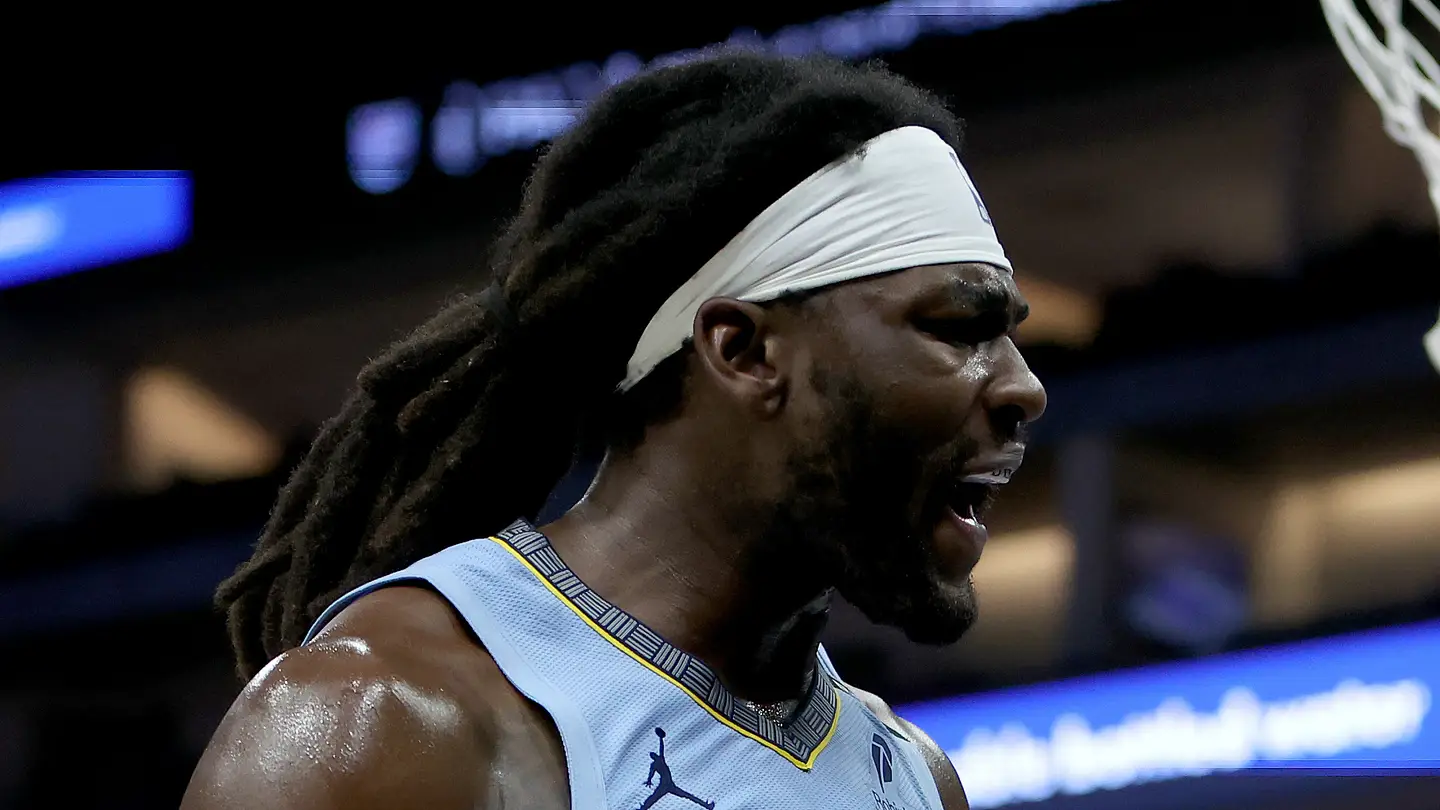

Pistons Shouldn’t Regret Trading Isaiah Stewart Despite Strong Start in Memphis
The Detroit Pistons entered the season noticeably thin at center, a direct consequence of moving Isaiah Stewart to the Memphis Grizzlies over the summer. With the Grizzlies racing to a 5-0 start and Stewart anchoring their defense, it is easy to second-guess the decision. But a closer look at Detroit’s roster construction, Stewart’s offensive limitations, and the emergence of internal alternatives suggests the Pistons made the right call—and that the early returns in Tennessee do not change the calculus.
Stewart Is Doing Exactly What Detroit Already Knew
In Memphis, Stewart has resumed the role he occupied for years in Detroit: defensive anchor, culture setter, and reliable play finisher. He is averaging roughly 10 points per game while shooting 60% from the field and 50% from three-point range, though the volume remains minimal—just two three-point attempts per game—and most of his baskets come on assists. The efficiency stands out, but the sample size is still very small. More importantly, the production reflects the same skill set Stewart displayed in a Pistons uniform. He has not yet added the shot creation or expanded shooting range that Detroit was seeking when it decided to move on.
Detroit Needed More Than a Finisher
The Pistons’ issue with Stewart was never his effort or defensive impact. It was the ceiling on his offensive game. At his size, he struggles to finish through strong contests on rolls and lacks the handle to avoid reaching hands from active perimeter defenders. His offense can look passable—and occasionally impressive—during the regular season, but it does not have the foundation to carry over effectively into the playoffs. Detroit opted for Paul Reed as its backup center precisely because Reed offers more offensive juice and versatility off the bench.
The Playoff Reality That Drove the Trade
Detroit’s front office reached this conclusion before the trade, particularly after Stewart’s decline in last season’s playoffs. In a postseason environment, opposing defenses systematically target limitations in size and decision-making. Until Stewart demonstrates meaningful growth in shot creation or consistent outside shooting, trading him remains the logical decision for a Pistons team trying to build a roster capable of advancing beyond the regular season.
Young Players and the Bigger Picture
The trade also aligns with Detroit’s broader priority: developing its remaining young talent. The Pistons would rather see growth from players like Ausar Thompson, whose increased aggression has stood out early, and Paul Reed, who continues to expand his scoring repertoire. Moving Stewart clears minutes and shots for those players while removing a defensive specialist whose offensive game had stagnated.
Why the Grizzlies’ Hot Start Doesn’t Change Detroit’s Mind
Memphis is benefiting from a known commodity in Stewart, and his presence has helped the Grizzlies get off to a strong start. But early-season success for one player on one team does not invalidate Detroit’s reasoning. Stewart has yet to prove he can evolve beyond the role the Pistons already had. Until that happens, the Pistons are content to look forward with Reed and their younger core rather than backward at a trade that still makes strategic sense.
Isaiah Stewart’s smooth transition to Memphis is a credit to his professionalism and established value as a defensive presence. For the Pistons, however, the trade was never about denying Stewart a fresh start; it was about acquiring a better fit for their own timeline and postseason aspirations. With center depth thin but young talent developing, Detroit’s decision to trade Stewart looks increasingly like a calculated roster move rather than a mistake—and early returns in Memphis are unlikely to change that verdict.
Sports, News, NBA, Detroit Pistons, Memphis Grizzlies, Isaiah Stewart, Paul Reed, Ausar Thompson, NBA Trade Analysis, Professional Basketball


