


Norwalk Unveils Plan to Reconnect Communities Severed by Interstate 95
NORWALK — For decades, Interstate 95 has done more than carry traffic through southeastern Connecticut; it has functioned as a physical barrier between two of the city’s most vital neighborhoods. Residents of Wall Street and South Norwalk have long described the highway as a wound in the urban fabric, separating communities that officials insist are one.
That separation is now the focus of a concerted redevelopment effort. During a Tuesday night meeting at the South Norwalk Library, the Norwalk Redevelopment Agency (NRA) outlined the Reconnecting Communities Project, a new initiative designed to heal the divide created when the interstate was built in the 1950s.
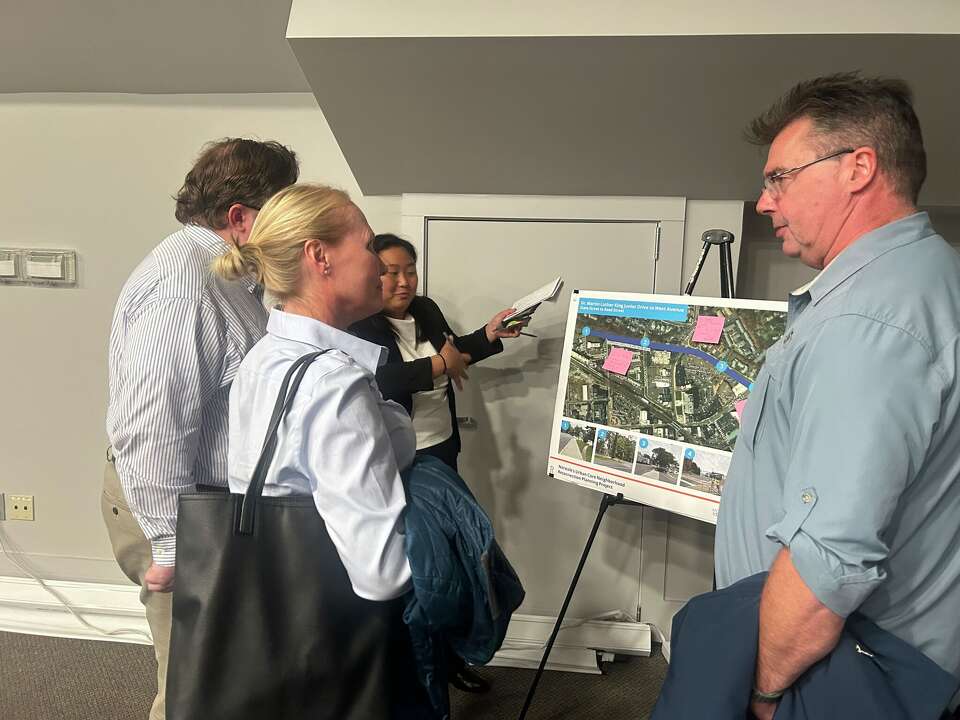
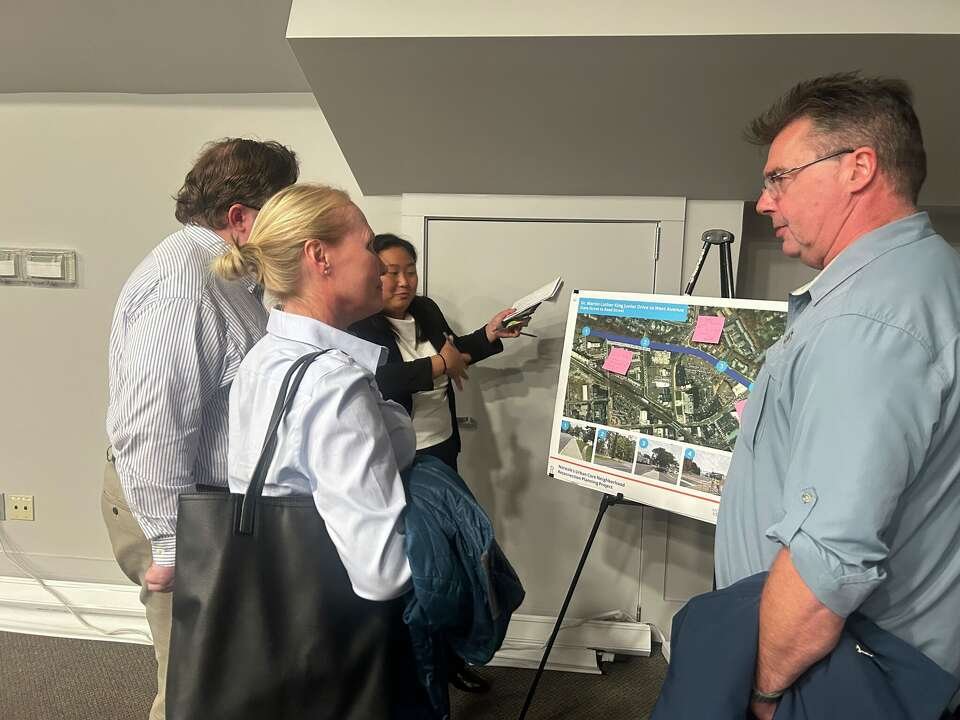
Residents gathered at the South Norwalk Library to discuss plans aimed at reconnecting Wall Street and South Norwalk, areas split by Interstate 95. (Shaniece Holmes-Brown / Hearst Connecticut Media Group)
The Legacy of the Interstate Divide
The roots of the problem stretch back over 70 years. When Interstate 95 was constructed through Norwalk in the 1950s, it sliced directly through the heart of the city, physically and psychologically cutting Wall Street from South Norwalk. The result, according to city leaders, has been generations of missed connections.
“We’re one community, but we’ve got this highway that’s cut us in half,” said Mayor Barbara Smyth during the community meeting.
The agency’s executive leadership emphasized that the highway was not built with community cohesion in mind. While it provided a direct route for commuters, it left local streets fragmented and created an environment where walking, biking, and connecting across the corridor became difficult for residents.
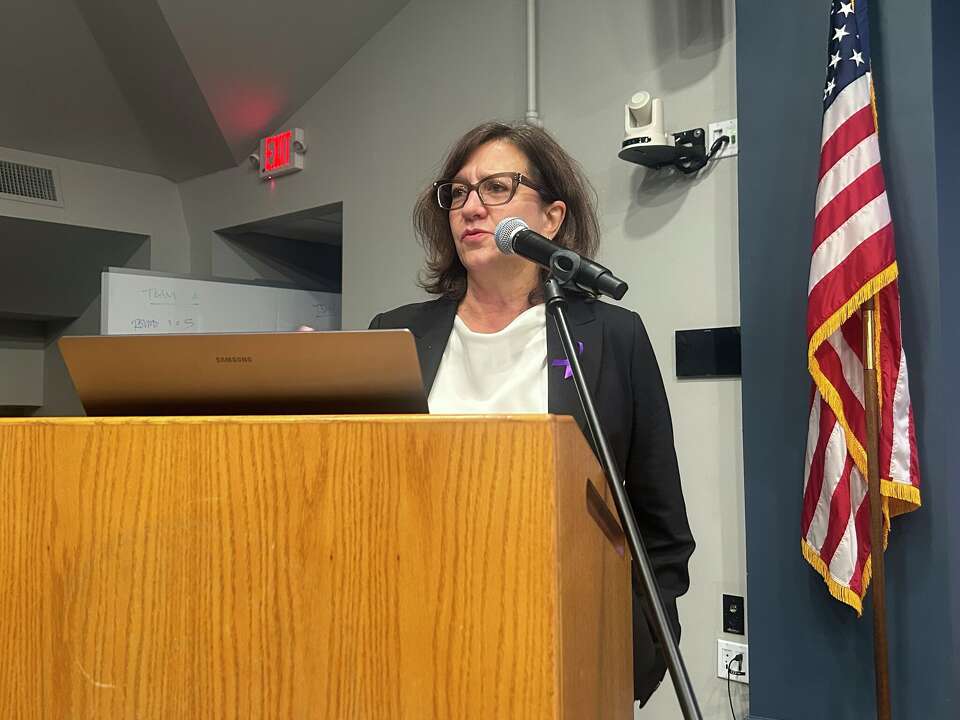
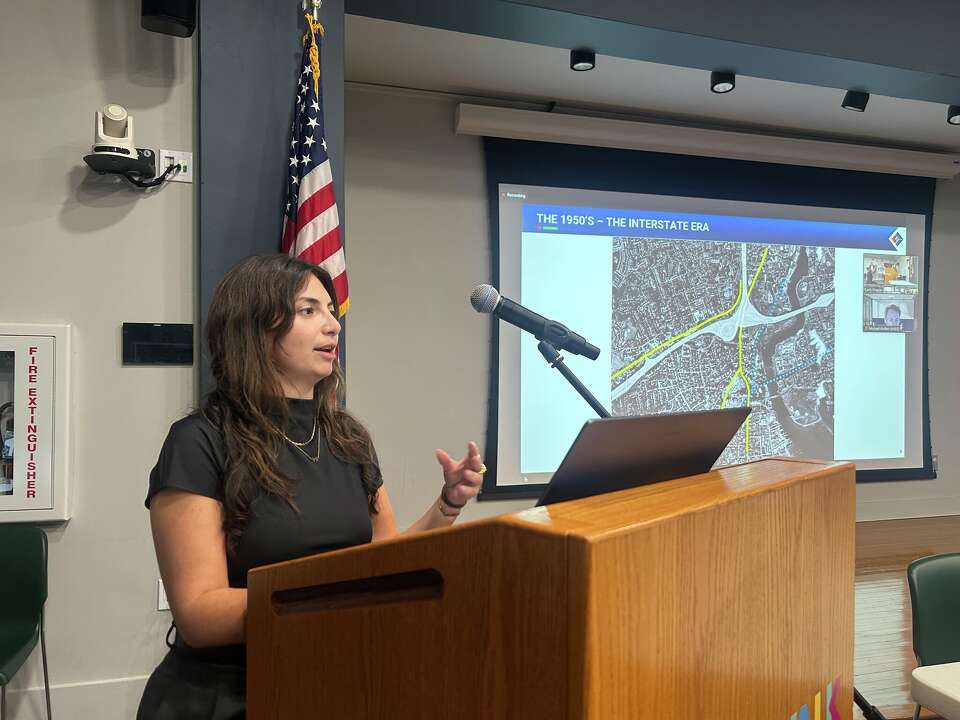
Mayor Barbara Smyth (left) and Carly Kramer, community planner with the Norwalk Redevelopment Agency (right), addressed the community regarding the proposed reconnection plan. (Shaniece Holmes-Brown / Hearst Connecticut Media Group)
What Is the Reconnecting Communities Project?
The Reconnecting Communities Project is an improvement plan currently in the design phase. According to Executive Director Brian Bidolli, the agency is not simply proposing a road widening or a new bridge. Instead, they are approaching the issue from a community-first perspective, examining the historical impacts of the highway and seeking collaborative solutions.
“What we want to do is basically examine what have been the impacts, what can we do to sort of address those impacts, and then have a community conversation to sort of collaboratively identify potential solutions,” Bidolli said. The process explicitly relies on resident input to shape the final design, acknowledging that the people who live and work in the affected areas know the daily realities of the infrastructure best.
Funding and Geographic Scope of the Plan
The project is backed by a significant combined investment, funded through a mix of federal grant money and local capital reserves. The financial structure supports the initial scoping and design work necessary to move the concept from an idea to a buildable plan.
| Source | Amount | Role |
|---|---|---|
| U.S. Department of Transportation | $600,000 | Neighborhood Access and Equity Program grant |
| City of Norwalk | $150,000 | Capital funds contribution |
The geographic scope of the project is defined by the corridor it seeks to heal. The plan spans from Dr. Martin Luther King Drive northward to West Avenue, continuing until it intersects with Belden Avenue. The Crescent Street area is also included in the study zone, recognizing its role as a key connector within the neighborhood.
Carly Kramer, the agency’s community planner, offered a balanced view of the highway’s history. She noted that while the interstate served as a “convenient tool” that provided jobs and economic opportunities for the region, it simultaneously imported negative externalities that the community has lived with for generations.
Community Voices from the Town Hall
The atmosphere at the South Norwalk Library was one of cautious optimism. Residents expressed support for the concept of reunification, viewing the highway not as an immutable fact of geography but as a policy decision that could be revisited.
“I think this is a great start,” said Cranbury resident April Wennerstrom. “The best part about Norwalk is the diversity of each mini community within our great city. So this is a great project.”
However, optimism was tempered by the lived experience of daily travel. South Norwalk resident Kenneth Aviles highlighted a dilemma that many commuters face between safety and convenience on the existing corridors.
“Are you going to risk the rather dangerous road conditions there walking down West Avenue to be on time, or you’re going to take to a much safer corridor, which is Crescent Street, and be late? We need to pay attention to both corridors,” he said. His point underscored a central challenge for the project: improving safety without sacrificing connectivity or speed.
Katy Lockhart, also a South Norwalk resident, pushed for the integration of existing natural infrastructure into the plan. She suggested highlighting and upgrading the Norwalk River Valley Trail as a primary alternative travel route.
“You can go so many places, like behind all of the traffic, that it just seems like that could be bulked up a little bit and get some better pedestrian crossings and really like, focus on that existing path that’s there,” Lockhart said. She envisioned a route that would connect the library, Wall Street, and the other side of the river without fighting vehicular congestion.
Safety, Walkability, and Missing Infrastructure
From an engineering standpoint, the barriers to reconnection are concrete and well-documented. Michael Morehouse, a traffic engineer with consulting firm IMEG, outlined the specific deficits that make the current infrastructure hostile to non-drivers.
Morehouse highlighted several critical issues across the study area, including missing sidewalks, absent crosswalks, stretches of road where proper crossings are too far apart, a lack of dedicated bike lanes, and specific hot spots where crashes are known to occur.
Key Infrastructure Gaps Identified: Missing sidewalks, inadequate crosswalk spacing, lack of bicycle lanes, and documented crash hot spots along West Avenue and Crescent Street.
“All great cities, if they want to evolve, need to make sure that they’re taking care of safely accommodating people traveling by all kinds of modes and people of all abilities as well,” Morehouse said. His comments framed the project not just as a roadway improvement, but as a public health and accessibility initiative.
Director of Transportation, Mobility and Parking Jim Travers also spoke at the meeting, bringing the perspective of the city’s own transportation department to the conversation regarding how the plan must integrate with existing municipal systems.
Where to Go Next: Upcoming Community Meetings
The Norwalk Redevelopment Agency has made it clear that this project is in a collaborative scoping phase. Moving forward from an initial design concept into a finalized plan requires ongoing feedback loops with the public.
Additional community meetings regarding the project are scheduled for November 9 and November 10. These sessions will take place at the SoNo Collection, offering a venue more centrally located within the commercial district that the project aims to serve.
The agency is also stressing the importance of stakeholder engagement beyond the public forum. Morehouse noted that private property owners within the study area would need to be involved and share their visions before the project could move forward. “I think that that’s such a potentially strong connection. It’s hard to see this plan going forward without something there that really strengthens that,” he said.
For Norwalk, the Reconnecting Communities Project represents a chance to rewrite the legacy of a highway built over half a century ago. As the next phase of community input begins, the hope among residents and officials alike is that the two halves of the city will finally become whole again.
News, Government, Transportation, Communities, Real Estate, Finance, Health, People, Norwalk, Connecticut, South Norwalk, Wall Street, Interstate 95, Norwalk Redevelopment Agency, Reconnecting Communities Project, Neighborhood Access and Equity Program, Urban Planning, SoNo Collection, Positive