

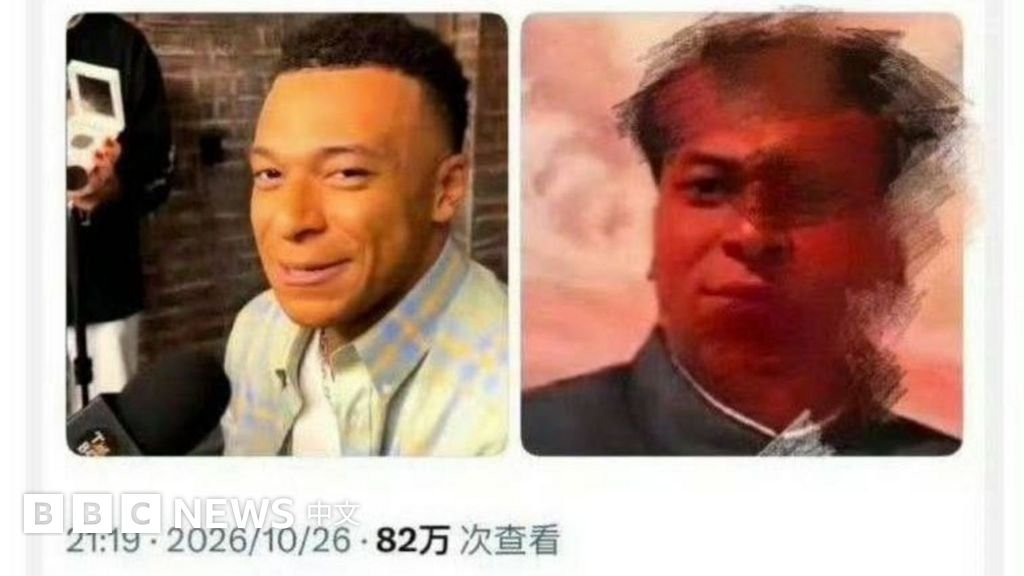

Mbappé Apology Follows Controversial Mao Zedong Meme, Chinese Brands Withdraw Partnerships
On October 27, 2026, French football star Kylian Mbappé issued a public apology after a viral meme depicting him with the face of Mao Zedong sparked widespread controversy in China. The incident has led to the termination of commercial partnerships with several major Chinese brands and prompted a strong reaction from the Chinese Football Association, highlighting the complex intersection of sports, culture, and geopolitics in modern international relations.
Origin of the Controversy: The “Mao Zedong” Meme
The controversy originated from a viral meme that emerged on social media platforms including Reddit, X (formerly Twitter), and Threads. The meme was based on a segment from the Spanish football program The Bridge, where Mbappé was interviewed and reportedly mentioned a meme featuring his face superimposed over an image of Mao Zedong, the founding leader of the People’s Republic of China. The image was widely circulated with the caption suggesting Mbappé was using the meme to joke about being called a “dictator.”
While Mbappé did not explicitly name Mao Zedong in his original interview, the post-production of the segment added a composite image that many viewers interpreted as depicting him with the leader’s face. This visual juxtaposition quickly went viral, with users sharing the image and adding their own commentary. The meme resonated particularly strongly among Chinese netizens, who saw it as an inappropriate and disrespectful portrayal of a revered historical figure.
Mbappé’s Public Apology and Chinese Football Association Response
Within hours of the meme’s spread, Kylian Mbappé addressed the situation directly through his X account. He stated that his comments in the interview were “not appropriate” and that he deeply regretted any offense caused to Chinese people and the Chinese diaspora. Mbappé emphasized that he holds “deep respect for this people and their history” and expressed genuine sorrow for the hurt his words may have caused.
The Chinese Football Association (CAFA) responded swiftly, condemning the incident and demanding a formal apology from Mbappé. The association declared that any speech that “harms Chinese people’s feelings” is unacceptable and called for the player to issue a public apology. CAFA also expressed its support for the Chinese Football League and urged the international football community to maintain respect for Chinese cultural symbols.
Commercial Fallout: Chinese Brands Terminate Partnerships
The controversy quickly escalated into a significant commercial crisis for Mbappé, who has long enjoyed strong ties with Chinese consumers. Several major Chinese brands announced the termination of their partnerships with the French star, citing “harm to national feelings” as their reason.
Dongpu (东鹏), a beverage company, was among the first to announce its decision, stating that the company “firmly opposes and has zero tolerance for actions that harm national feelings.” Similarly, Mengwu (蒙牛) and Xingpu (妙可蓝多) followed suit, ending their collaborations with Mbappé. These brands had previously worked with the footballer, with Dongpu notably marketing his energy drink in China and Mbappé appearing in promotional campaigns.
Alongside the brand withdrawals, the Chinese Central Broadcasting Station (CCTV) paused the broadcast of Real Madrid matches and related content, while simultaneously removing all advertisements featuring Mbappé from its programming. The commercial fallout has been substantial, with analysts noting that Mbappé’s market value and commercial appeal in China have been significantly diminished by the incident.
Cultural Context: Mao Zedong’s Resurgence Among Chinese Youth
Beyond the immediate business consequences, the meme controversy has illuminated a broader cultural phenomenon: the resurgence of Mao Zedong in contemporary Chinese internet culture. Despite being deceased for over five decades, Mao’s image and ideology have experienced a remarkable revival among China’s younger generation, particularly those active online.
Platforms like Bilibili (B站) have seen millions of views on Mao-related videos, and the Mao Zedong Collection has consistently ranked among the most borrowed books at prestigious institutions such as the University of China. This cultural phenomenon reflects deeper societal dynamics, with many young Chinese people viewing Mao’s writings on class struggle, equality, and anti-capitalism as relevant frameworks for understanding contemporary social issues such as employment, housing, and gender inequality.
The incident with Mbappé has been interpreted by some as an example of how historical symbols can become politicized in the digital age. For Chinese netizens, the meme represented not just a joke about a football star, but a challenge to the careful navigation of historical memory and cultural sensitivity that is expected of international figures engaging with Chinese audiences.
Social Media Backlash and Public Reaction
The reaction to Mbappé’s apology and the subsequent brand withdrawals has been mixed across social media platforms. On X (Twitter), the conversation has been heated, with many users questioning the sincerity of Mbappé’s apology and the timing of his statement. Some netizens have criticized the incident as a case of “apology tourism,” where athletes issue statements to avoid further backlash rather than demonstrating genuine remorse.
On Weibo, the official account of the Chinese Football Association posted a statement expressing regret and calling for the player to “correctly understand” the sensitivity of the matter. The platform’s own news section has featured articles analyzing the incident, with some commentators drawing parallels to previous cases where Chinese companies have faced backlash for perceived cultural insensitivity.
Despite the official responses, the controversy has sparked broader discussions about the role of international athletes in China and the expectations placed on them regarding cultural respect. The incident has also drawn attention to the delicate balance between free expression and cultural sensitivity in cross-border interactions, particularly in sports diplomacy.
Broader Implications for International Sports and Chinese Relations
The Mbappé controversy represents a significant moment in the evolving relationship between Chinese and international sports. As a global superstar, Mbappé’s presence in China has been a subject of both admiration and scrutiny, and this incident has highlighted the risks of cultural missteps by foreign athletes.
For the Chinese government and football authorities, the incident underscores the importance of maintaining cultural respect in international engagements. The Chinese Football Association’s strong condemnation and the swift withdrawal of commercial partners demonstrate a clear stance against what it perceives as disrespectful behavior by foreign figures.
From a broader perspective, the case illustrates how social media has become a powerful amplifier for cultural controversies, allowing incidents to spread globally within hours and forcing international stars to navigate complex cultural landscapes with greater awareness. The incident may also influence future interactions between Chinese authorities and international athletes, potentially leading to more rigorous vetting processes and greater sensitivity to local cultural norms.
As the situation continues to develop, observers are watching closely to see how this episode will shape future sports diplomacy and whether it will lead to more collaborative efforts between Chinese and international football organizations to address cultural sensitivities proactively.
News, Sports, People, Business, Society, Internet, Entertainment, Online


