
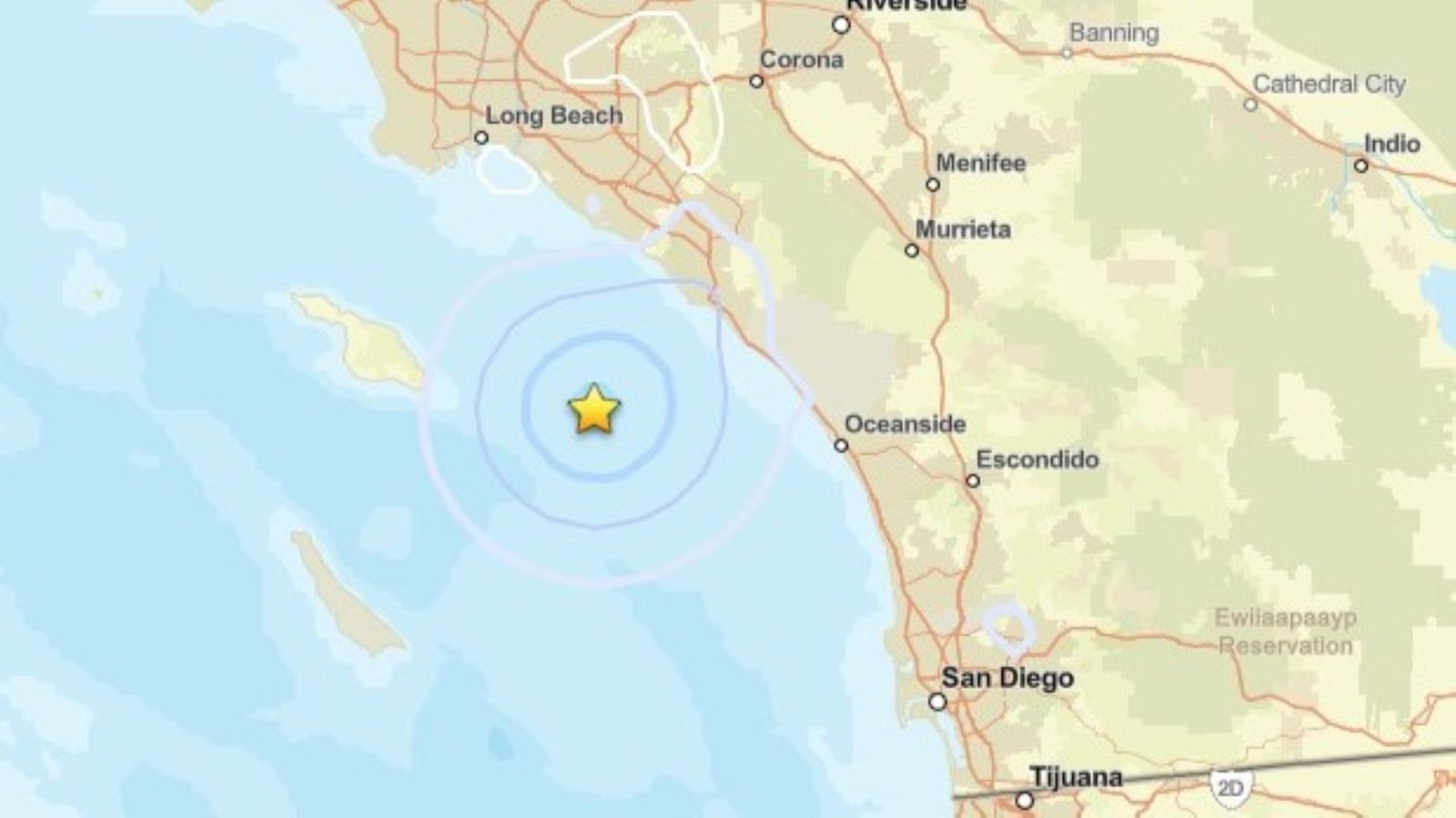


3.5-Magnitude Earthquake Strikes Southern Orange County; No Injuries Reported
DANA POINT, Calif. (KABC) — A preliminary 3.5-magnitude earthquake struck approximately 19 miles southwest of Dana Point in Orange County at 1:22 p.m. Monday, according to the United States Geological Survey (USGS). The seismic event, which occurred at a shallow depth of 7 miles, generated shaking felt throughout the southern Orange County region.
At 1:23 p.m., just one minute after the initial shock, USGS reported a 2.8-magnitude aftershock at the same location. Despite the localized shaking, there were no reports of immediate damages or injuries as of Monday evening.
What Happened During the Orange County Earthquake
The earthquake was centered beneath the Pacific Ocean, roughly 19 miles southwest of the Dana Point coast. While a magnitude 3.5 event is generally considered minor and rarely causes structural damage, its shallow depth of 7 miles means the shaking was perceptible to residents in the surrounding communities.
Seismic activity in California is monitored continuously by the USGS, which provides real-time data on earthquake magnitude, location, and depth. This particular event underscores the frequency with which minor tremors occur along the state’s active fault lines, even in coastal areas that residents sometimes consider lower risk.
For many homeowners and renters in Orange County, the event triggered immediate concerns about safety and structural integrity. Utility crews and emergency services were placed on alert, though no significant response was required given the magnitude of the quake.
Aftershock Activity and Regional Impact
Following the main shock, a 2.8-magnitude aftershock was recorded at 1:23 p.m. Monday. Aftershocks are common after even small earthquakes as the earth’s crust adjusts to the sudden movement along a fault line.
Residents across southern Orange County reported feeling the tremors, prompting calls to local authorities and social media discussions about the event. While minor aftershocks can be unsettling, they typically decrease in frequency and intensity over the following hours and days.
Remember: If you feel an earthquake, the USGS recommends Drop, Cover, and Hold On. Stay indoors until the shaking stops and be prepared for aftershocks, which can occur minutes, days, or even weeks later.
Safety Impact and Damage Reports
As of Monday evening, emergency management officials confirmed that there were no reports of immediate damages or injuries resulting from the quake. This is standard for a magnitude 3.5 event, which rarely exceeds minor rattling of objects and furniture.
Current Reports on Damage
Local authorities continue to monitor the situation for any delayed reports of infrastructure issues, such as cracked roads or damaged utilities. Residents who experienced significant shaking are encouraged to inspect their homes for potential hazards, including loose overhead fixtures or gas leaks.
Understanding California Seismic Risk
While this earthquake was minor, it serves as a reminder of California’s ongoing seismic risk. The state sits atop several major fault systems, including the San Andreas Fault, and experiences thousands of earthquakes annually, most too small to be felt.
Historical Context in Orange County
Orange County has a history of seismic activity, with major historical earthquakes occurring nearby in regions such as Whittier and Long Beach. Although the probability of a devastating event at any given moment is low, preparedness experts agree that the consequences of inaction can be severe.
This is why ABC7 has compiled a list of items that are important to have in your earthquake kit so that you’re prepared for “the big one.” Preparedness is the most effective tool available to individuals and families facing potential seismic events.
Preparing Your Emergency Kit
Building an emergency supply kit is a critical step in earthquake readiness. Experts recommend storing enough supplies to last at least 72 hours, as emergency responders may be delayed during or after a major disaster.
Essential Supplies Checklist
| Category | Recommended Items |
|---|---|
| Water | One gallon per person per day for at least three days |
| Food | Non-perishable food for at least three days |
| First Aid | First aid kit including bandages, antiseptic, and pain relievers |
| Light & Communication | Flashlight, extra batteries, and a battery-powered or hand-crank radio |
| Sanitation | Moist towelettes, garbage bags, and plastic ties |
| Tools | Wrench or pliers to turn off utilities |
Maintaining your kit by rotating food and water supplies every six months ensures it remains usable during an emergency. Digital copies of important documents, such as identification and insurance policies, should also be stored securely.
For the latest updates on seismic activity and emergency alerts, residents can check the USGS website or follow official channels from local agencies such as the Orange County Emergency Management Department and KABC-TV.
This earthquake, while minor, highlights the importance of staying informed and prepared. By keeping a well-stocked emergency kit and knowing the proper safety protocols, residents can respond effectively to any future seismic event.
News, Science, Government, Health, Society, Home, Education, California, Orange County, Dana Point, KABC, ABC7, Emergency Preparedness, Natural Disasters, Earthquakes