


Rays and Brewers Show Budget-Savvy Blueprint as Rangers Seek Offensive Identity
The 2026 postseason narrative has returned to a truth that big-spending baseball often overlooks: the highest payroll does not automatically produce the best team. As the Tampa Bay Rays and Milwaukee Brewers advanced toward a World Series matchup built on lean budgets, analytical roster construction, and disciplined execution, the Texas Rangers were left examining a different question. Coming off a season that ended without playoff baseball, Rangers president of baseball operations Chris Young told reporters at an end-of-year news conference that the team must become “more athletic and more dynamic.” The blueprint for doing so may already be on display in the American and National League’s most successful small-market clubs.
A Tale of Two Budget-Conscious Contenders
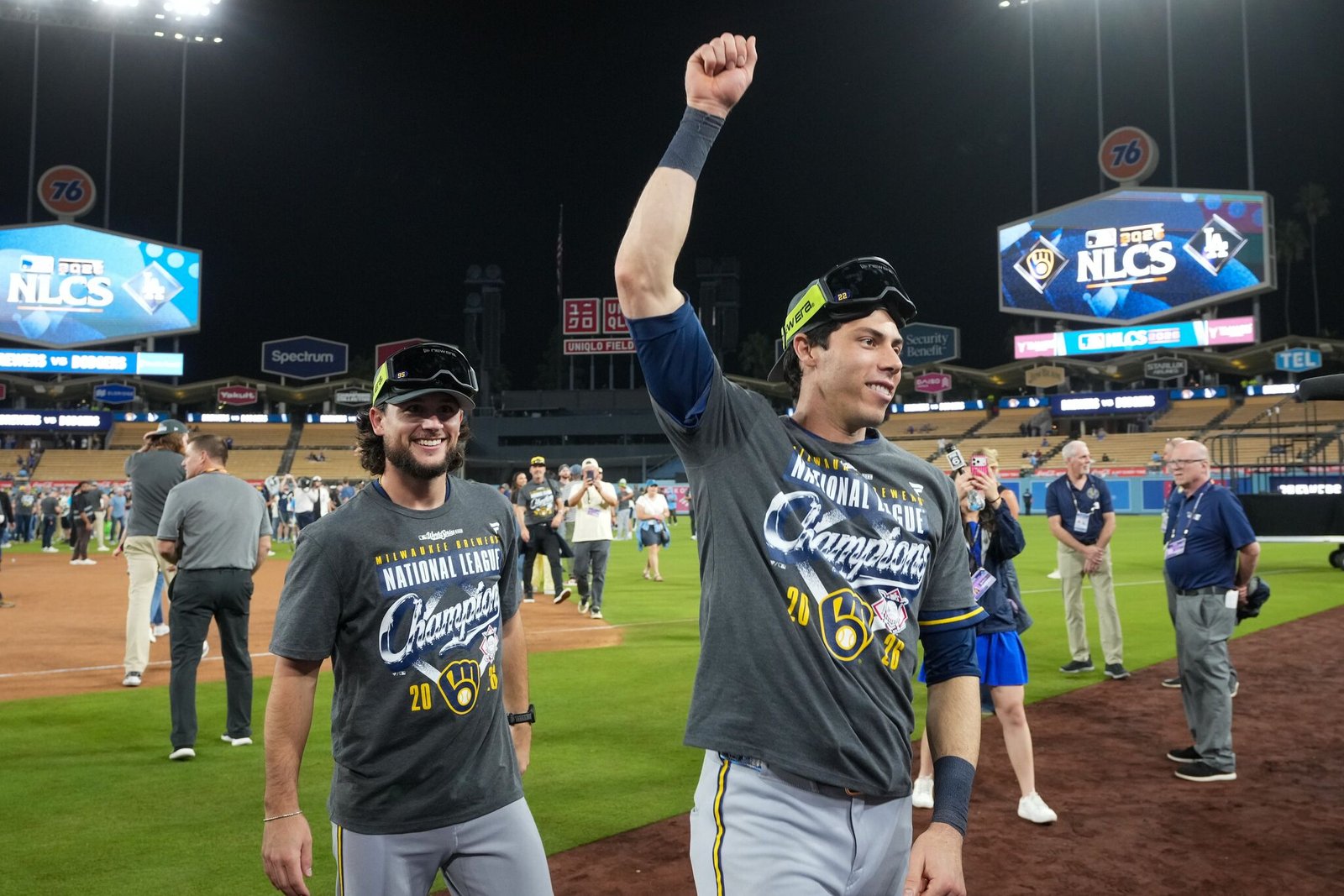
Suddenly, luxury-taxed payrolls are not in vogue anymore. The Brewers and Rays represent two organizations with modest spending profiles that prioritize analytics and strategic offensive approaches. Milwaukee ranked 19th in payroll, while Tampa Bay ranked 28th, yet both clubs constructed rosters capable of reaching baseball’s biggest stage. Milwaukee’s Christian Yelich was captured celebrating after Game 4 of the National League Championship Series against the Los Angeles Dodgers, a reminder that high-impact performance does not require a high-priced roster.
The infrastructure that allows the Brewers and Rays to maximize and develop talent on a budget takes years to build. The Rays found third baseman Junior Caminero through an under-the-radar trade, while the Brewers unearthed right-handed pitcher Jacob Misiorowski in the second round of the draft. Those successes cannot be replicated overnight, but the on-field approaches that accompany them are easier for a team like the Rangers to borrow while they work on long-term roster construction.
What the Rangers Can Borrow From Milwaukee and Tampa Bay
Chris Young’s end-of-season assessment pointed directly to the areas where the Rangers trail the league’s most efficient offensive clubs. The team needs a solidified offensive identity, and Young specifically called for a roster that is “more athletic and more dynamic.” The Brewers and Rays serve as examples of what that looks like in practice.
The Rangers were more pull-happy with runners in scoring position than they were with the bases empty, while the Brewers stuck to an all-fields approach in both scenarios. The Brewers were baseball’s best offense with runners in scoring position; the Rangers were league average.
That contrast matters because it shows how philosophical consistency, rather than payroll size, can separate contenders from also-rans. The Rangers do not need to duplicate Tampa Bay’s scouting department or Milwaukee’s player-development apparatus immediately. They can, however, adopt the strategic principles that allow those teams to manufacture runs without relying exclusively on home runs and hard contact.
Base Running: Speed Isn’t the Only Ingredient
The Brewers and Rays extract maximum value from the base paths, and the statistics illustrate the gap between their approach and Texas’s recent performance. Milwaukee ranked fourth league-wide in base running value, while Tampa Bay tied for ninth. The Rangers finished below average.
| Metric | Milwaukee Brewers | Tampa Bay Rays | Texas Rangers |
|---|---|---|---|
| Base running value rank | 4th | T-9th | Below average |
| Extra-base advance attempts | 483 (4th-most) | 445 (10th-most) | 366 (30th-most) |
| Run value via extra bases taken | 1st | 7th | League average |
| First-to-third on a single | 4th-most | 7th-most | Fewest |
| Stolen bases rank | 5th-most | 2nd-most | 26th-most |
| Team sprint speed | 28.1 ft/sec | 27.5 ft/sec | 27.2 ft/sec |
Sprint speed explains part of the equation. The Brewers were the fastest team in baseball at 28.1 feet per second, and the Rays were close behind at 27.5. The Rangers measured 27.2 feet per second, below the league average. Yet speed alone is not the deciding factor. Brewers first baseman Jake Bauers posted a 54% extra-base-taken percentage—better than every Rangers player—despite below-average sprint speed. Rays infielder Richie Palacios stole 17 bases, a total that would have tied Rangers outfielder Evan Carter for the team lead, also while operating with below-average speed.
Broader roster breadth separates the two models from Texas. Eight different Brewers players and eight different Rays players stole at least eight bases. On the Rangers, only three players reached that threshold. Aggressive, intelligent base running creates extra scoring chances without requiring additional hits, a lesson Texas can apply even before its roster turnover is complete.
Hitting the Other Way: Diversifying the Offensive Identity
Milwaukee and Tampa Bay also succeed by refusing to become pull-happy one-trick offenses. The Brewers led baseball with a 26.5% opposite-field batted-ball rate, and the Rays ranked second at 25.4%. Hitting to all fields makes batters harder to exploit, forces pitchers to use the whole strike zone, and stretches defenses across the entire infield and outfield. It also reduces dependence on pull-side power and slugging, which pitchers can more easily game-plan against and which can lead to offensive blackouts.
Despite below-average home run totals and hard-hit percentages, the Brewers and Rays ranked fourth and seventh league-wide in on-base plus slugging percentage. The Rangers hit more home runs and recorded harder contact than both clubs, yet scored fewer runs. That is not an argument against home runs or exit velocity; it is an argument for offensive diversity.
History supports the approach. In 2023, under manager Skip Schumaker, the Miami Marlins led baseball with a 27.1% opposite-field rate and reached the postseason. The Rangers are not entirely far from this model. They prioritized the middle of the field at an above-average rate, but the difference was situational. Texas became more pull-oriented with runners in scoring position, while Milwaukee maintained its all-fields approach regardless of the score or baserunners. The result was a Brewers team that ranked as baseball’s best offense with runners in scoring position, while the Rangers finished league average in those situations.
Small Ball and the Sacrifice: Manufacturing Runs Without Slugging
Schumaker and the Rangers already understand the value of sacrificing outs for runs, but the Rays and Brewers provide a modern reinforcement of the principle. Tampa Bay led baseball in sacrifice hits (45) and bunt hits (49). Milwaukee ranked in the top five in both categories. The Rangers actually finished fourth league-wide with 39 sacrifice hits, and when they emphasized that strategy more heavily midseason, they manufactured runs without needing to slug the baseball.
Personnel still matters. Rays outfielder Chandler Simpson and Brewers infielder David Hamilton led their teams in bunt hits, aided by 95th-percentile speed. On the current Rangers roster, only Carter, infielder Cam Cauley, and utility player Ezequiel Duran offer comparable speed, and only one of those players should be guaranteed close to everyday starts next season. That is one reason a more athletic roster should be a priority for Texas.
Still, elite small ball is not reserved exclusively for burners. Rays infielder Taylor Walls and outfielder Cedric Mullins combined for 41 bunt hits and sacrifices despite posting only above-average sprint speeds. Discipline, preparation, and willingness to execute the fundamentals can produce results even when elite wheels are not available.
The Path Forward for Texas
The Rangers face a clearer offseason challenge than simply adding a free-agent slugger. They need an offensive identity that functions across the entire field, a base-running culture that creates runs from singles and walks, and enough athletic depth to execute bunts, stolen bases, and extra-base advances consistently. The Brewers and Rays have demonstrated that those traits can coexist with modest payrolls, but the infrastructure behind them took years to assemble.
For Texas, the immediate opportunity lies in borrowing what is already visible on the field: opposite-field discipline, aggressive but intelligent base running, and a willingness to manufacture runs in small increments. Chris Young wants a more athletic and dynamic Rangers team. The teams playing for the World Series this October suggest exactly how that vision can become reality without matching the luxury-tax arms race.
Sports, News, MLB, Texas Rangers, Tampa Bay Rays, Milwaukee Brewers, Chris Young, Skip Schumaker, 2026 MLB Season, Baseball Analytics, Roster Construction, Baseball Fans, Sports Analysis, Texas, Florida, Wisconsin, United States, Arlington, Neutral


