

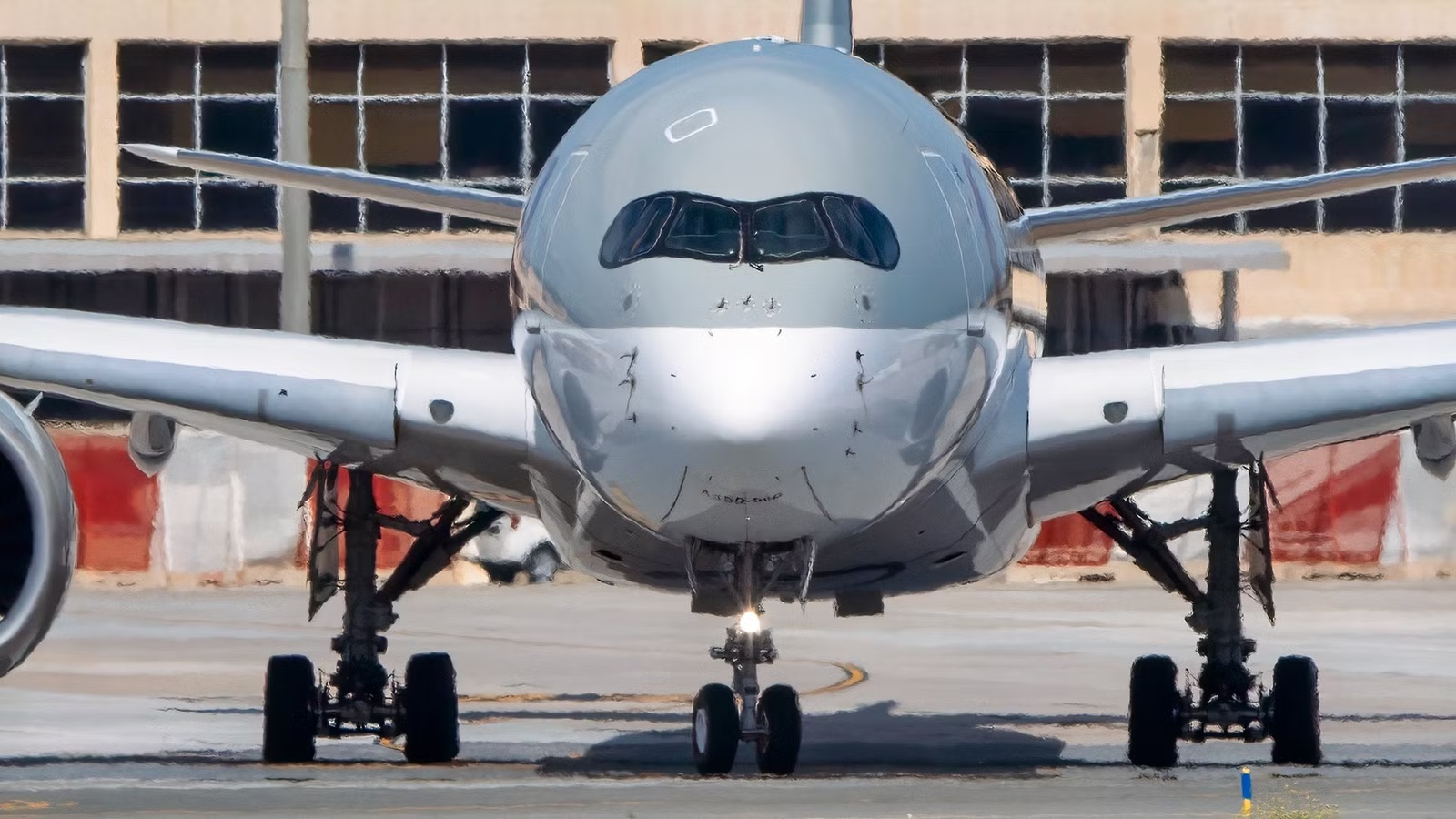

Qatar Airways’ A350 Dominance on Short-Haul Routes
Qatar Airways continues to cement its position as a leader in long-haul aviation while simultaneously expanding its expertise in ultra-short-range operations. The airline’s commitment to the Airbus A350 family—particularly the A350-900 and A350-1000 variants—has made it the world’s second-largest operator of the twin-jet, with a fleet comprising 30 A350-1000s and 34 A350-900s. These aircraft collectively represent 28% of the carrier’s passenger fleet, underscoring how deeply integrated the A350 has become in Qatar’s network strategy.
The World’s Shortest Bookable A350 Operation
Among the most intriguing developments is Qatar Airways’ deployment of A350-900s on what is widely considered the world’s shortest bookable A350 route: the connection between Doha Hamad International Airport (DOH) and Bahrain International Airport (BAH). Spanning just 80 nautical miles (approximately 148 kilometers) along a great-circle path, this corridor represents a remarkable application of widebody capability on extremely short legs. The airline operates this service twice monthly in late 2026, with flights scheduled for November 8 and 29, followed by returns in December and January.
While this DOH-BAH pairing captures headlines for its brevity, it is not technically the absolute shortest A350 operation in existence. That distinction belongs to a much more unusual route: the Bonaire-Flamingo International Airport (BON) to Curaçao International Airport (CUR) segment, approximately 41 nautical miles (76 kilometers) apart. Operated by World2Fly on a three-seater A350-900 for Corendon Dutch Airlines, this service has historically been the shortest scheduled A350 flight, though it lacks standalone booking availability due to complex traffic rights arrangements.
Between 2004 and 2026, Cirium data indicates Qatar Airways has deployed 14 different aircraft types and variants between Doha and Bahrain, with the A350-900 ranking among the most frequently flown models in this corridor.
Beyond Doha-Bahrain: Emerging Short-Haul A350 Deployments
Qatar Airways’ strategic use of the A350 extends well beyond the Doha-Bahrain corridor. The airline maintains a robust presence on several high-frequency short-haul routes, with the A350-900 and A350-1000 forming the backbone of its premium and mid-cruise offerings. According to recent operational analyses, the A350-900 accounts for roughly 28% of the carrier’s overall fleet, making it a critical asset for both efficiency and brand positioning.
One notable upcoming deployment involves the Zurich-Milan Malpensa route, which has emerged as a bookable A350 operation in October 2026. This fifth-freedom service between Switzerland and Italy demonstrates the A350’s versatility in connecting major European hubs. While this route does not yet surpass the Doha-Bahrain frequency, it contributes to Qatar Airways’ broader strategy of diversifying its network footprint across Europe and Asia.
The Controversy Surrounding Qantas’ Fleet Reductions
Separately, the Australian carrier Qantas has announced significant changes to its international network, canceling all flights to five destinations. This move reflects broader industry pressures and shifting demand patterns, forcing airlines to reconsider route economics and fleet allocation. The decision impacts connectivity for travelers relying on these specific connections and raises questions about the future of regional networks in the Asia-Pacific region.
A350 Operations in the Global Aviation Landscape
The Airbus A350 has become synonymous with modern long-haul and medium-haul operations worldwide. Its advanced aerodynamics, fuel efficiency, and cabin comfort have made it a preferred choice for carriers seeking to expand into secondary markets and optimize turnaround times. Qatar Airways exemplifies this trend by leveraging the A350 platform across diverse route profiles, from ultra-short links in the Middle East to transcontinental services connecting Dubai and Doha to global destinations.
Technical Considerations for Short-Range Widebody Operations
Operating A350s on routes as brief as 80 nautical miles presents unique operational challenges that require careful management. The aircraft’s range capabilities allow for efficient routing even on short legs, but frequent short-haul deployments can impact crew scheduling, maintenance cycles, and fuel optimization strategies. Qatar Airways’ success on the DOH-BAH route demonstrates that with proper planning, widebody aircraft can serve niche markets effectively while maintaining profitability.
Data analysis reveals that the A350-900 forms the core of Qatar Airways’ short-haul portfolio, with three daily flights typically available during peak months. The aircraft’s ability to operate efficiently on both high-density corridors and isolated island connections makes it a versatile asset in the airline’s mixed fleet strategy.
Future Outlook for Long-Haul A350 Deployments
Looking ahead, the A350 remains a cornerstone of Airbus’ commercial product lineup, with ongoing production and upgrades extending its relevance through the 2030s. Qatar Airways’ continued investment in this platform suggests confidence in its adaptability to evolving market demands. As the airline expands its network and explores new destinations, the A350 will likely play an increasingly prominent role in connecting underserved regions and enhancing passenger experience standards.
For aviation enthusiasts and industry observers alike, the story of Qatar Airways’ A350 operations offers valuable insights into how modern airlines balance scale with specialization. The combination of massive long-haul networks and agile short-haul deployments defines the contemporary model of successful international carriers.
Travel, Business, Transportation, Technology, News


